 By Alex
 Menlo Ventures: AI startups win on workflow, not models
Menlo Ventures partner Matt Murphy says the fastest AI startups are winning with platforms, workflow integration and speed—not model quality alone.
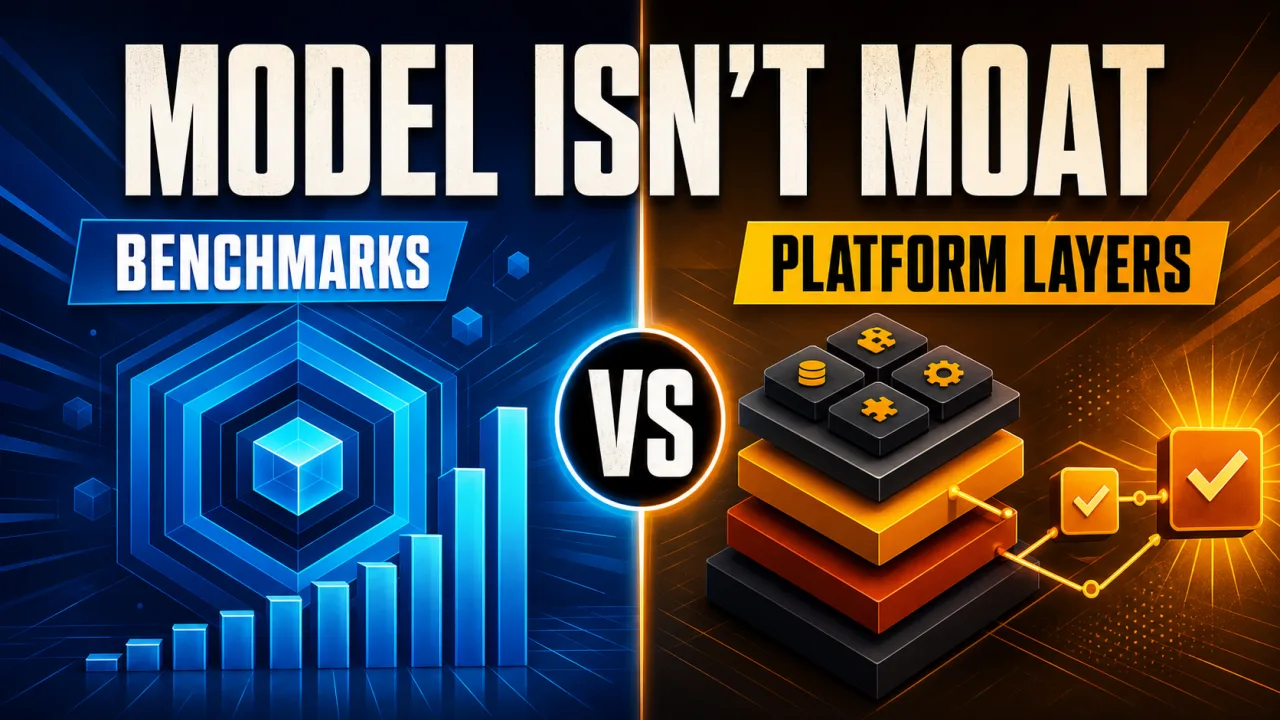
Definition: Matt Murphy’s argument is that AI startups should build around model intelligence, not mistake the model itself for the whole product.
Evidence: TechCrunch reports that Murphy points to Anthropic’s platform layer, including Claude Code, tool connections and Claude Skills, as part of the company’s edge.
Founder implication: A startup needs a workflow customers can adopt, repeat and trust—not only a model that performs well in a benchmark.
Key takeaway: The durable question is where the product creates value after the model produces an answer.
AI startup founders are being asked to compete in a market where model capability can improve faster than a company can rewrite its roadmap. That makes the familiar pitch—“our model is better”—less complete than it once sounded.
In a TechCrunch Equity episode, Menlo Ventures partner Matt Murphy explains why he thinks the fastest-growing AI companies are doing something different. His examples center on Anthropic, but the founder lesson is broader: build the layers that turn intelligence into a dependable product, then move quickly enough to keep those layers aligned with customer behavior.
This is not a claim that model quality no longer matters. It is a claim about where model quality becomes business value.
What Matt Murphy sees in Anthropic’s unusual growth
The scale of Anthropic’s reported growth is the reason Murphy’s argument has weight. TechCrunch says Anthropic reached a $47 billion revenue run rate by May, compared with $9 billion in 2025. Murphy described that pace as unlike anything he had seen across 25 years of investing, including the internet, mobile and early cloud waves.
Menlo had an unusually close view of the company. The firm led Anthropic’s $500 million Series D and had backed the company at a $4 billion pre-revenue valuation, when Anthropic was still a pre-launch bet. Murphy also points to Google and Amazon becoming investors as an early “green shoot”—a signal that the company could attract strategic support before the market had fully priced its future. More on this: The Anthropic-Physical Intelligence rumor roiling AI Twitter.
The takeaway is not that every AI startup should imitate Anthropic’s financing path. Most founders will not have Anthropic’s research team, market timing or strategic context. The useful point is what Menlo was evaluating before ordinary revenue metrics were available: a technical team, a foundation-layer opportunity and signs that the surrounding ecosystem could become an advantage.
Why Anthropic’s model was not the whole moat
Murphy’s central distinction is between a model and the platform built around it. A model can generate the intelligence, but customers experience the tools, workflows and interfaces that determine whether that intelligence actually changes their work.
The TechCrunch summary specifically names Claude Code, MCP and Claude Skills. Anthropic describes Agent Skills as organized instructions, scripts and resources that give agents specialized knowledge. Its Model Context Protocol (MCP) explainer covers the standard way for agents to connect with external systems and tools.
Together, those layers illustrate the product surface Murphy is talking about. The model is one component. The platform also needs context, tool access, procedural knowledge, permissions, reliability and a way to fit into the customer’s existing work. That is the same shift described in what an AI agent is: useful autonomy depends on the system around the language model, not on text generation in isolation.
For founders, the practical question is therefore not only “Which model can we access?” It is “What does our product let the customer accomplish that a raw model cannot accomplish as reliably?”
What AI startup founders should build beyond the model
A product layer becomes meaningful when it removes repeated friction. That can mean connecting to the systems a customer already uses, preserving the right context, enforcing an approval boundary or packaging domain knowledge into a workflow the customer can repeat.
The source does not provide a checklist from Murphy, so the following is an analytical translation of his examples rather than a direct quotation. An AI startup should examine four surfaces:
| Product surface | Founder question | Why it matters |
|---|---|---|
| Workflow | What job does the product complete from start to finish? | A complete outcome is easier to value than an isolated answer. |
| Context | What information does the system need, and how does it keep that context current? | Useful output depends on relevant, controlled information. |
| Tools | Which external systems can the product read or change? | Action turns intelligence into operational utility. |
| Distribution | Why will the right users discover and keep using it? | Adoption is part of the product, not a later marketing patch. |
The strongest answer is specific. “We use an advanced model” is a capability statement. “We turn a lawyer’s request into a reviewed, source-linked work product inside the team’s existing process” is a product promise that can be tested.
How speed changes the founder’s job
Murphy also points to Lovable and Legora as companies growing faster than any startups he has seen in 25 years. That observation matters because AI-native products can shorten the distance between an idea, a working prototype and a customer-visible improvement.
Speed, however, is not the same as rushing. A faster team can still build the wrong feature faster. The relevant advantage is a tighter loop between customer demand, product instrumentation, deployment and learning. Founders need to know which user behavior would confirm that a workflow is becoming indispensable and which behavior would show that the product is merely producing impressive demos.
This is where a platform strategy meets operating discipline. When models, APIs and interfaces change frequently, the company that can test a workflow, observe failure and improve the surrounding system may outpace a company with a stronger isolated benchmark score.
Why distribution is part of AI product design
A capable AI product can fail if users have no reason to change their current behavior. Murphy’s warning, as summarized by TechCrunch, is aimed at the assumption that customers will automatically re-platform because a model is better.
That assumption skips the switching cost. Customers already have data, permissions, habits, review processes and systems of record. A founder who wants adoption must decide whether to integrate with those realities, replace a painful step or create a new workflow valuable enough to justify the change.
Distribution therefore belongs in the product thesis. It can come from an existing channel, a trusted vertical workflow, an ecosystem partner, a community or a product that naturally spreads through the work it produces. None of these is guaranteed by model quality. They are separate design and execution problems.
What the Mythos backlash adds to the lesson
The episode also covers the backlash to Anthropic’s Mythos rollout. TechCrunch says Murphy pushed back on the idea that the rollout was more marketing than safety.
That disagreement is useful because it shows another layer of AI company-building: trust is part of the product. When a company introduces a safety or research initiative, users and developers interpret both the technical decision and the communication around it. A founder cannot assume that a good safety rationale will explain itself, or that a marketing narrative can substitute for evidence.
The practical takeaway is to make safety claims concrete. Explain what changed, what risk the change addresses, how users can observe the effect and where uncertainty remains. For AI products embedded in real workflows, that clarity can be as important as another marginal improvement in model output.
What founders should measure when models keep changing
A model-centric dashboard can overemphasize scores that do not predict business durability. Murphy’s platform argument suggests tracking product signals closer to the customer’s actual job.
Useful questions include: How often does a user reach a completed outcome? Where does a human reviewer intervene? Which tool calls fail? How much context must the user repeat? Does the workflow become faster or more reliable after repeated use? Which customers expand from one task to adjacent tasks?
These are not claims about Menlo’s internal metrics; the TechCrunch page does not publish such a dashboard. They are an analytical measurement layer derived from the difference between a model demo and a product that customers depend on. The goal is to find out whether the surrounding system is creating compounding value even as the underlying model changes.
The founder lesson is platform value, not platform theater
Murphy’s thesis is easy to reduce to a slogan: the model is not the moat. The more precise version is harder and more useful. A model can be a powerful source of capability, but a defensible AI company usually needs to own more of the customer’s workflow than the model endpoint alone.
That means building context deliberately, connecting tools safely, earning distribution and learning quickly. It also means resisting platform theater—the addition of integrations, agents or features that look expansive but do not make the customer’s core job better.
Anthropic is the example Murphy uses because its reported growth makes the distinction visible. For other founders, the test is smaller and immediate: can the product complete a meaningful job, fit the customer’s operating reality and improve with use? If the answer is no, a better model may only produce a more impressive demo.
Frequently asked questions
What does Matt Murphy say AI startup founders must do differently?
Murphy’s argument is that founders cannot treat a better model as a complete business strategy. The strongest companies are building a product layer around intelligence: workflows, tools, distribution, integrations and a repeatable way for customers to get useful work done. That does not make model quality irrelevant, but it changes where differentiation is created. A startup needs to show why users will adopt its product, return to it and let it become part of a real operating process rather than merely admire a benchmark result.
Why does Murphy say Anthropic’s model was not the real moat?
TechCrunch’s interview summary says Murphy sees Claude Code, the Model Context Protocol and Claude Skills as part of the move from a strong model to a broader platform. These layers give a model ways to use tools, connect to external systems and carry procedural knowledge into work. The lesson for founders is not to copy Anthropic’s exact stack. It is to ask what durable product surface surrounds the model and whether that surface makes the system more useful, embedded and difficult to replace. See also Claude voice mode can switch models mid-conversation.
What did Menlo Ventures see in Anthropic early?
Menlo Ventures led Anthropic’s $500 million Series D after backing the company at a $4 billion pre-revenue valuation, according to the TechCrunch episode page. Murphy describes the early Google and Amazon investments as a green shoot that helped validate the opportunity. The important point is not that every founder should seek the same investors or valuation. It is that Menlo was underwriting a team and a platform opportunity before the business had conventional revenue proof, while watching for evidence that the company could attract strategic support and expand beyond research.
Why are Lovable and Legora relevant to AI startup founders?
Murphy points to Lovable and Legora as examples of startups growing faster than companies he has seen across 25 years of investing. The TechCrunch summary does not turn that observation into a universal growth formula, and founders should not assume that speed alone creates a moat. The useful signal is the competitive bar: AI-native products can compress the distance between a user request and a working outcome. Founders therefore need tight product feedback loops, clear distribution and an operating model that can learn faster than the market changes.
Does model quality still matter for an AI startup?
Yes, but Murphy’s thesis places model quality inside a larger system. A capable model can improve the product’s ceiling, but it does not automatically create adoption, retention or a defensible business. The startup still needs a reliable workflow, useful context, tool access, safety boundaries and a reason for customers to keep returning. In practice, model choice can change as the market moves. A product that owns the user’s job, data flow or operating process may remain valuable even when the underlying model landscape changes. Related reading: Runway launches AI model router as generative media gets crowded. Background: Claude Fable 5 Survives the Subscription Axe — But Not for Everyone. Background: Anthropic and OpenAI's Industry AI Push Raises Questions. Background: AI usage data still misses personal use. Background: AI training on copyrighted books: what courts say now.
Frequently asked questions
What does Matt Murphy say AI startup founders must do differently?
Murphy’s argument is that founders cannot treat a better model as a complete business strategy. The strongest companies are building a product layer around intelligence: workflows, tools, distribution, integrations and a repeatable way for customers to get useful work done. That does not make model quality irrelevant, but it changes where differentiation is created. A startup needs to show why users will adopt its product, return to it and let it become part of a real operating process rather than merely admire a benchmark result.
Why does Murphy say Anthropic’s model was not the real moat?
TechCrunch’s interview summary says Murphy sees Claude Code, Anthropic’s tool-connection standard and Claude Skills as part of the move from a strong model to a broader platform. These layers give a model ways to use tools, connect to external systems and carry procedural knowledge into work. The lesson for founders is not to copy Anthropic’s exact stack. It is to ask what durable product surface surrounds the model and whether that surface makes the system more useful, embedded and difficult to replace.
What did Menlo Ventures see in Anthropic early?
Menlo Ventures led Anthropic’s $500 million Series D after backing the company at a $4 billion pre-revenue valuation, according to the TechCrunch episode page. Murphy describes the early Google and Amazon investments as a green shoot that helped validate the opportunity. The important point is not that every founder should seek the same investors or valuation. It is that Menlo was underwriting a team and a platform opportunity before the business had conventional revenue proof, while watching for evidence that the company could attract strategic support and expand beyond research.
Why are Lovable and Legora relevant to AI startup founders?
Murphy points to Lovable and Legora as examples of startups growing faster than companies he has seen across 25 years of investing. The TechCrunch summary does not turn that observation into a universal growth formula, and founders should not assume that speed alone creates a moat. The useful signal is the competitive bar: AI-native products can compress the distance between a user request and a working outcome. Founders therefore need tight product feedback loops, clear distribution and an operating model that can learn faster than the market changes.
Does model quality still matter for an AI startup?
Yes, but Murphy’s thesis places model quality inside a larger system. A capable model can improve the product’s ceiling, but it does not automatically create adoption, retention or a defensible business. The startup still needs a reliable workflow, useful context, tool access, safety boundaries and a reason for customers to keep returning. In practice, model choice can change as the market moves. A product that owns the user’s job, data flow or operating process may remain valuable even when the underlying model landscape changes.
Alex
Founder & Lead AI Writer
Alex is the founder of Yowox and lead AI writer since 2024, breaking down complex information into clear, actionable insights for thousands of readers every day. Alex has built AI automation systems for businesses since 2024, focusing on AI agents, workflow automation, and business process optimization.
Save hours. Save thousands.
Practical guides, real workflows, and the latest AI and automation news that matters — straight to your inbox.