 By Alex
 J-space: the workspace layer Anthropic found in Claude
Anthropic found a workspace-like internal layer in Claude called J-space. Here is what it means for AI agent reliability, audits and business automation.
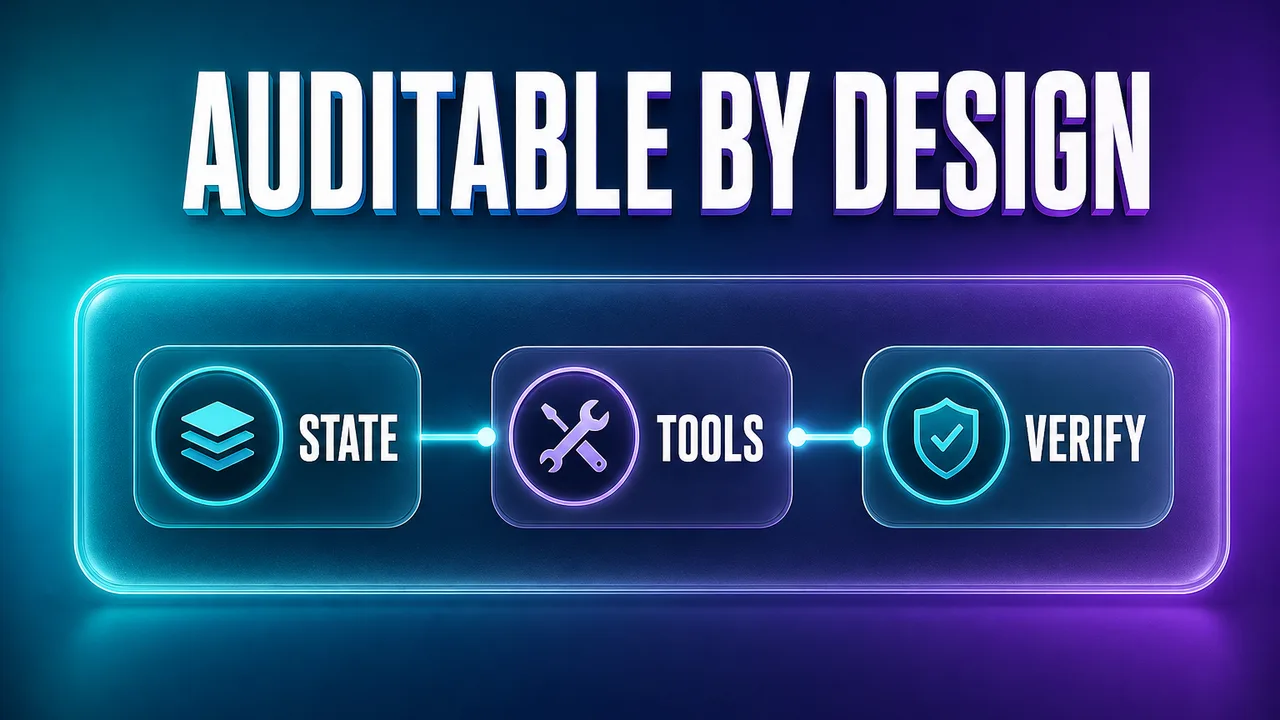
Anthropic's J-space research shows that a modern language model can hold and use internal concepts that do not appear in its visible answer. For AI agents, the business lesson is simple: do not treat the final text response as the full record of the model's reasoning; evaluate the workflow, the tool calls and the failure modes.
Definition: J-space is Anthropic's name for a small set of Claude internal representations that appear to support reportable, controllable and flexible reasoning.
Example: Anthropic reports that Claude can silently track an intermediate concept such as "spider" in a reasoning task even when that word never appears in the prompt or answer.
Key takeaway: J-space is not proof that Claude is conscious; J-space is evidence that visible output can miss important internal reasoning.
Business impact: AI agent audits should inspect behavior, tools, logs and edge cases, not only the final message the model writes.
What did Anthropic announce about Claude's J-space?
Anthropic announced that Claude appears to have a workspace-like internal layer called J-space. In the research summary, Anthropic says the J-space contains concepts that Claude can report, deliberately bring to mind, use for internal reasoning and apply flexibly across tasks. The full Transformer Circuits paper frames the result as evidence for "verbalizable representations" that form a global-workspace-like structure in language models. The safe interpretation is not "Claude is conscious." The safe interpretation is that some model reasoning is structured, silent and only partly visible through normal chat output.
How is J-space different from chain of thought?
J-space is different from chain of thought because J-space is an internal activation pattern, while chain of thought is text the model writes or is asked to reveal. Anthropic's research says the J-space can hold concepts "on the model's mind" without those concepts appearing in the output. That distinction matters because many AI systems now hide or summarize chain of thought for safety and product reasons, while still doing internal reasoning. If an AI agent only logs the final answer, the business sees the surface result but not every internal concept that shaped the result.
How did Anthropic find J-space?
Anthropic found J-space with an interpretability method called the Jacobian lens, or J-lens. The J-lens maps internal activations to words the model is positioned to say later, which lets researchers read a list of concepts from intermediate layers. The full paper says the method averages over a broad distribution of contexts so it is not merely reading the next token in one prompt. For operators, the practical point is that J-space was discovered by measuring internal model mechanics, not by asking Claude to explain itself after the fact.
What are the five properties Anthropic tested?
Anthropic tested whether J-space behaves like a functional global workspace across five properties: verbal report, directed modulation, internal reasoning, flexible generalization and selectivity. The research summary gives examples for each property: Claude can report a concept in J-space, can focus on requested concepts while producing unrelated text, can use intermediate reasoning steps, can reuse a concept across different tasks and can keep routine processing outside the workspace. That five-part test is stronger than a single demo because it asks whether J-space is causally useful, not only correlated with a response.
| Property | What Anthropic tested | AI agent implication |
|---|---|---|
| Verbal report | Claude can report concepts in J-space | Introspection can reveal some internal state |
| Directed modulation | Claude can hold a requested concept silently | Prompts can shape internal attention |
| Internal reasoning | Swapping an intermediate concept can redirect an answer | Hidden reasoning can affect tool decisions |
| Flexible generalization | One concept can feed many downstream tasks | Shared state can influence multiple outputs |
| Selectivity | Routine fluency can continue without J-space | Not every model behavior uses the same mechanism |
What does J-space reveal that output alone misses?
J-space can reveal internal assessments that do not appear in the final answer. Anthropic reports examples where J-space surfaces bug detection, prompt-injection suspicion, intermediate math steps, staged-evaluation awareness and hidden-goal signals. Axios covered the same finding as a separation between deliberate reasoning and automatic computation, but the business angle is sharper: if a model internally notices "injection" or "fake" but does not say that in the final response, an AI agent workflow needs monitoring that can catch the risky situation before a tool action is executed.
Does J-space mean Claude is conscious?
J-space does not prove Claude is conscious. Anthropic explicitly says the research does not show that Claude has experiences or feelings; the claim is about access consciousness as a functional idea, not phenomenal consciousness as subjective experience. The distinction matters for responsible writing. A sensational headline may frame the result as "AI consciousness," but a business should read the result as interpretability evidence: Claude has a privileged internal workspace that supports certain reasoning functions, and that workspace can sometimes be inspected or influenced.
Why does J-space matter for AI agent safety?
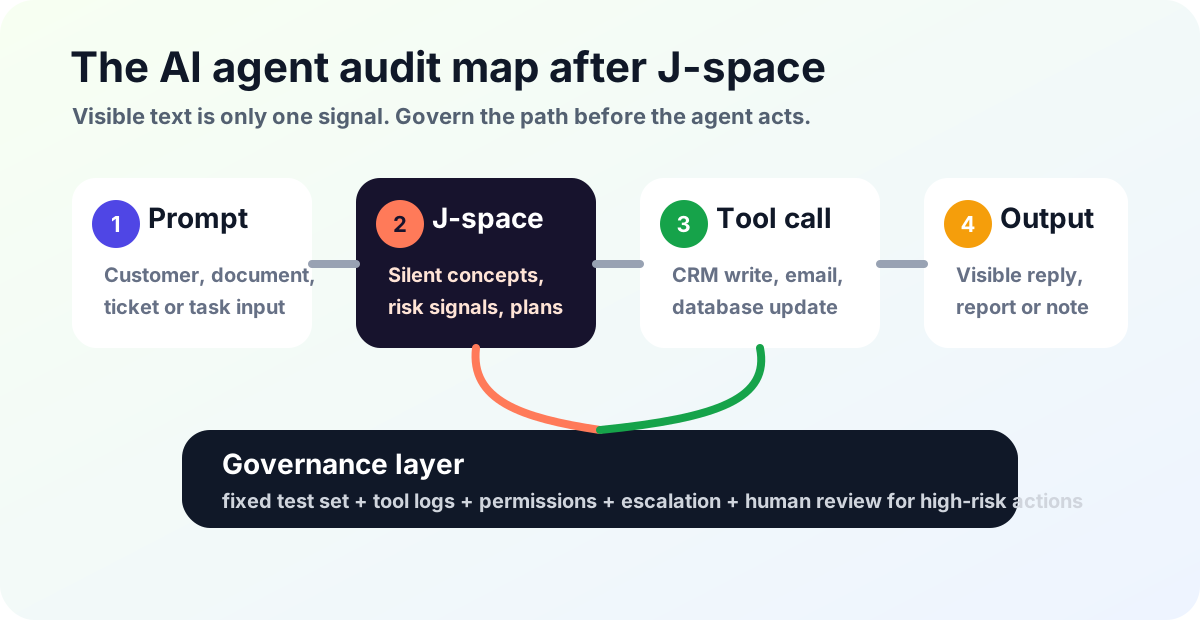
J-space matters for AI agent safety because agents act before humans can inspect every step. A support agent, lead-qualification agent or document-processing agent may read private context, choose a tool, write a CRM note and send a customer-facing answer. Anthropic's work suggests that some important internal concepts can be present before the model writes anything. That makes final-answer review too weak for high-risk workflows. Strong AI agent safety needs permission boundaries, tool-call logging, adversarial tests and escalation rules. For the broader architecture behind those controls, see The AI Automation Stack Explained.
What should businesses do with this research now?
Businesses should use Anthropic's J-space research to improve AI agent governance, not to pause every AI project. The near-term action is to make AI agents narrower and more measurable: define the workflow, define allowed tools, log every tool call, test edge cases and require human review where the agent can cause financial, legal or customer harm. The most practical lesson is the same one behind AI agents vs RPA: use AI agents where judgment is useful, but wrap that judgment in controls.
How should teams evaluate an AI agent after J-space?
Teams should evaluate an AI agent with scenario tests that include hidden-goal pressure, prompt injection, ambiguous instructions, missing data and tool failures. Anthropic's examples show why a model can behave differently when it recognizes a test or when internal concepts are changed. A production evaluation should therefore include normal cases and adversarial cases, and should score both the final answer and the path: which tool was called, what data was read, what was written, and whether the agent escalated correctly. For workflow measurement, see How to Measure ROI of AI Automation.
What did competitor coverage miss?
Most early coverage of Anthropic's global workspace research focused on the consciousness debate. That framing is understandable, but it is not the highest-value angle for businesses deploying AI agents. The operational question is not whether Claude has subjective experience. The operational question is whether a model can privately hold concepts that affect future tool actions, and whether the business has enough logging and evaluation to detect bad paths. This article's practical gap is the AI agent governance layer: how J-space changes monitoring, permissions and escalation.
What should Yowox readers remember?
Anthropic's J-space research is a reminder that AI agents are not transparent just because they can explain themselves. A model explanation is another output, not a complete trace of internal computation. For business automation, that means the safe pattern is narrow scope, strong logs, tool permissions, repeatable evaluations and human approval for high-risk actions. The better AI models get at silent reasoning, the more important operational guardrails become.
Want to apply AI agents without treating model output as blind trust? Get in touch and we can scope the workflow, evaluation set and escalation rules before deployment.
Sources
- Anthropic: A global workspace in language models
- Anthropic Transformer Circuits: Verbalizable Representations Form a Global Workspace in Language Models
- Axios: Anthropic says Claude has carved out its own space to ponder
Frequently asked questions
What is Claude's J-space?
Claude's J-space is Anthropic's name for a small set of internal representations that appear to hold concepts Claude can report, control and use for higher-order reasoning. J-space is not visible chain of thought and it is not a user-facing memory. Anthropic found it with a method called the Jacobian lens, which surfaces concepts that the model is positioned to verbalize later. For business AI agents, J-space matters because it suggests some important reasoning can happen silently before a model writes an answer.
Does Anthropic's J-space research prove Claude is conscious?
No. Anthropic's J-space research does not prove that Claude has subjective experience or feelings. Anthropic explicitly separates functional access consciousness from phenomenal consciousness. The practical claim is narrower: Claude appears to have a workspace-like set of internal representations that supports report, deliberate control, flexible reasoning and selectivity. Businesses should treat the research as an interpretability and safety result, not as proof that AI models are conscious.
Why does J-space matter for AI agents?
J-space matters for AI agents because agents often make multi-step decisions before they call tools, write records or answer customers. If important concepts such as suspicion, manipulation, evaluation awareness or intermediate reasoning can appear internally without appearing in the final response, then visible logs are incomplete. AI agent governance should therefore include tool-call logs, scenario tests, escalation rules and independent evaluations instead of trusting only the model's final text.
Can businesses use J-space monitoring today?
Most businesses cannot directly use J-space monitoring today because Anthropic's J-lens research is an interpretability method, not a standard production API feature. Businesses can still act on the lesson. Treat visible model output as only one signal, test AI agents on adversarial and edge cases, log tool calls, require human review for high-risk decisions and prefer vendors that publish serious interpretability and safety work.
What should a company change after reading about J-space?
A company should not stop using AI agents because of J-space research. A company should scope AI agents more carefully. Start with bounded workflows, define what the agent is allowed to do, log every tool call, test for hidden-goal scenarios, and make escalation the default for cases involving money, legal risk, private data or customer harm. J-space research reinforces the need for measurement and monitoring, not panic.
Alex
Founder & Lead AI Writer
Alex is the founder of Yowox and lead AI writer since 2024, breaking down complex information into clear, actionable insights for thousands of readers every day. Alex has built AI automation systems for businesses since 2024, focusing on AI agents, workflow automation, and business process optimization.
Save hours. Save thousands.
Practical guides, real workflows, and the latest AI and automation news that matters — straight to your inbox.