 By Alex
 Hermes Agent playbook: why repetition beats clever prompts
A source-led look at the Hermes Agent operating playbook: start narrow, turn repeated work into skills, and add automation only after the workflow is safe and useful.
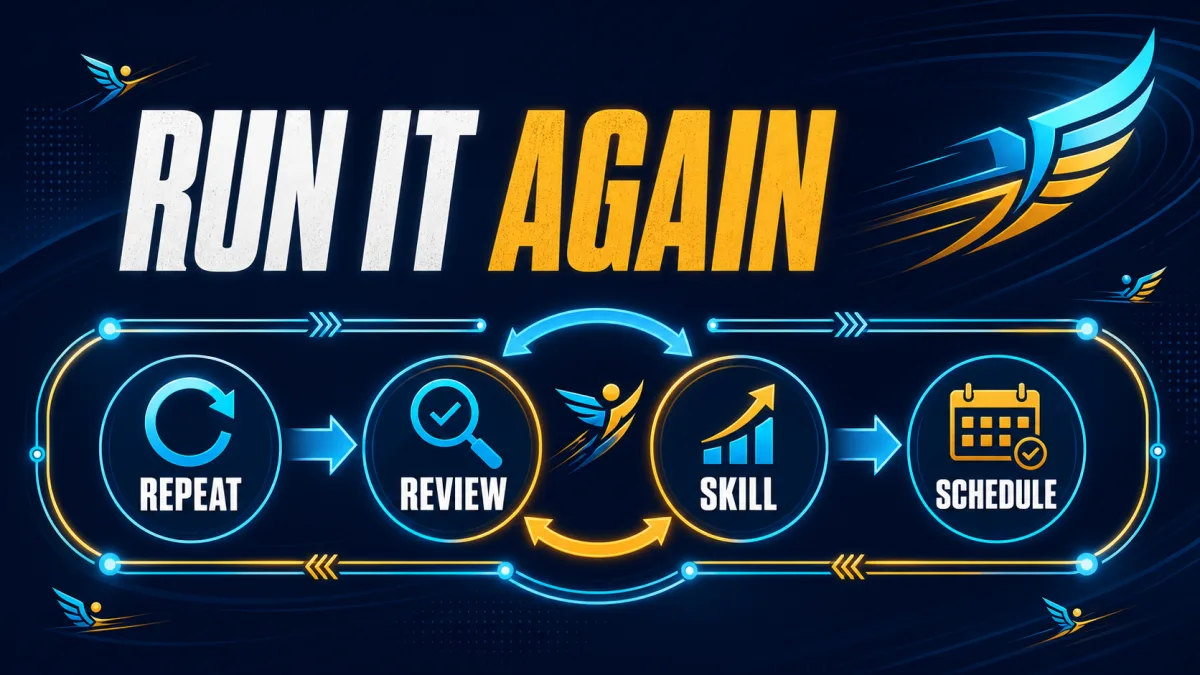
A new source-led playbook for Hermes Agent argues that the gap between trying Hermes once and getting durable value from it is operational, not prompt-theoretical. The author describes a three-week deployment on a small VPS in which repeated staging work led Hermes to create a reusable skill. The takeaway for operators is simple: start with recurring friction, prove the workflow, and let repetition earn the next layer of autonomy.
Definition: The playbook treats Hermes Agent as a long-running operating layer around a language model, not as a one-shot chatbot session.
Example: A repeated engineering task is run manually, refined, scheduled, monitored, and eventually captured as a reusable skill.
Key takeaway: Repetition is the input to Hermes Agent's learning loop; clever prompts are only the starting point.
Business impact: A narrow, reviewed workflow can compound into automation, while a broad untested deployment compounds mistakes.
What does the Hermes Agent playbook actually change?
The article's most important shift is from installation to operation. The source presents Hermes Agent as a system that can execute work, evaluate the result, preserve a procedure as a skill, and retrieve it later; the official Hermes documentation makes the complementary point that this power sits inside a defense-in-depth security model. Together, those ideas change the first question from “What can Hermes do?” to “Which repeated task can Hermes do safely enough to improve?”
That framing also separates Hermes Agent from a conventional chat interface. The source describes persistent memory, reusable skills, multiple messaging gateways, delegated subagents, and scheduled jobs as parts of one operating model. The practical value is not any single feature; it is the connection between them. A task can begin in a private chat, use tools in a controlled workspace, return a result, and later become a repeatable procedure without asking the operator to restate the whole workflow.
Why does repetition matter more than prompt cleverness?
Repeated work gives Hermes Agent evidence about what should be remembered. In the source's opening example, the agent notices that the operator keeps explaining the same staging-deployment process and turns that pattern into a skill. The evidence is a concrete recurring task, not a benchmark score or a claim that the model itself has changed. Operators should therefore look for workflows with stable inputs, repeatable steps, and an observable result before trying to “teach” Hermes everything at once.
This is procedural memory, not model retraining. A skill can preserve a sequence of actions, checks, and conventions; a memory entry can preserve a stable preference or environment fact. Both can make later sessions more efficient, but both can also become stale. The safe operating rule is to review a skill when the underlying repository, provider, credential scope, or deployment process changes, just as a team would review an old runbook.
What rollout sequence does the source recommend?
The playbook's rollout sequence is deliberately conservative because each step creates evidence for the next one:
- Install and verify. Read the installer instead of blindly piping an unfamiliar script into a privileged environment, then run the documented health and version checks.
- Choose the operating boundary. Select a provider, workspace, messaging surface, and execution backend that match the task rather than enabling every integration by default.
- Start with one narrow workflow. The source uses a daily engineering-status digest because it is repeatable, mostly read-only, and easy to inspect.
- Run the workflow manually. Check whether the result is accurate, short enough to be used, and capable of identifying the information that matters.
- Schedule only the stable version. Describe the tested workflow to Hermes Agent's scheduler, define its destination, and keep the first outputs under review.
- Promote the process to a skill. Once the workflow is consistently useful, record it explicitly so Hermes can reuse and adapt the procedure.
The sequence matters because automation multiplies both value and defects. A five-day review of a read-only digest can expose a weak prompt or missing data source cheaply; the same review is much harder after a workflow has been connected to production write access or an unattended schedule.
Which Hermes Agent controls matter before production?
The source's production section puts access control, approvals, sandboxing, credential handling, prompt-injection defenses, and observability ahead of convenience. That emphasis matches the official security guidance, which describes user authorization, dangerous-command approval, file-write safety, container isolation, MCP credential filtering, context-file scanning, cross-session isolation, and input sanitization as separate boundaries. Operators should treat the list as a checklist of independent failure modes, not as one “safe mode” switch.
A practical baseline is to keep the Gateway private, use pairing or allowlists for messaging, give each workflow only the tools and credentials it needs, and keep risky commands behind explicit approval. A Docker or remote backend can reduce the blast radius of terminal work, but it does not replace authorization: a correctly sandboxed agent can still send the wrong message, schedule the wrong job, or leak data through an allowed provider if the workflow is mis-scoped.
The same principle applies to scheduled work. A cron job is not merely a reminder; it is a future execution authority. Give each job an owner, a clear destination, a bounded output, and a removal path. Keep read-only jobs separate from jobs that can modify files, send external messages, or touch infrastructure, and test what happens when a provider fails or a credential is revoked.
How does this fit with existing Hermes guidance?
The new playbook is best read as an operating companion to Yowox's Hermes Agent explained guide, not as a replacement for it. The guide explains the runtime, memory, skills, providers, gateways, delegation, and execution backends; the source-led article adds a sharper adoption lesson: those parts only compound when they are attached to a workflow that actually repeats.
For teams deciding whether the learning loop or a channel-first system is the better fit, Hermes Agent vs. OpenClaw provides the broader comparison. For the controls around any tool-using deployment, AI agent security: five layers for production covers the wider inventory, credential, runtime, and model risks that sit around the agent itself. Related reading: OpenClaw vs Hermes Agent: Security, Usage, and Migration.
What should operators watch next?
The source is a practitioner playbook, not a Nous Research product announcement, so its usage rankings, ecosystem comparisons, and operational estimates should be treated as claims made in that article rather than as official Hermes metrics. The durable point is narrower and more useful: Hermes Agent's distinctive promise depends on a loop between real work, evaluation, persistent procedure, and later reuse.
That makes the next step measurable. Pick one recurring workflow, define what a good result looks like, restrict the tools and data it can reach, and run it long enough to discover whether Hermes is learning a useful procedure or merely accumulating stale instructions. If the workflow survives that test, add scheduling or delegation. If it does not, fix the workflow before adding more autonomy.
Frequently asked questions
What is the main idea in the Hermes Agent playbook?
The main idea is that Hermes Agent becomes more useful through repeated, real workflows rather than through clever prompts alone. The source describes an agent that notices recurring work, turns the pattern into a reusable skill, and retrieves that skill later. The practical implication is to begin with one narrow task, use it manually until the output is reliable, and only then schedule or expand it. The playbook is about operating discipline: repetition creates useful procedural memory, while premature autonomy creates a larger failure surface.
Should Hermes Agent be given broad permissions on the first day?
No. The source recommends treating an initial Hermes Agent installation as infrastructure that needs deliberate setup, not as a reason to grant every tool immediately. Start with a small workspace, a private channel if messaging is enabled, read-only access where possible, and approvals for risky actions. Add tools, credentials, and automation one at a time. This sequence makes it easier to identify whether a bad result came from the prompt, the model, the integration, or the permission boundary before the system can affect production data.
When should a Hermes workflow become a scheduled job?
A Hermes workflow should become scheduled only after a manual version produces useful results consistently. The source's engineering-status example follows that order: define the trigger, required tools, output length, and approval point; run the request manually; adjust it; then describe the stable task to the cron scheduler. Review the output for several working days before treating it as dependable. Scheduling a vague or untested workflow only makes the same uncertainty repeat automatically.
Is Hermes Agent's learning the same as retraining an AI model?
No. In the playbook, Hermes Agent's improvement comes from persistence: memories preserve selected facts and skills preserve reusable procedures. That changes the context and workflow available to future sessions, but it does not imply that the underlying model weights were retrained. The distinction matters operationally because stored memories and skills can become stale or unsafe. They should be reviewed like configuration and runbooks, especially when they can trigger tools, access credentials, or create scheduled work.
Alex
Founder & Lead AI Writer
Alex is the founder of Yowox and lead AI writer since 2024, breaking down complex information into clear, actionable insights for thousands of readers every day. Alex has built AI automation systems for businesses since 2024, focusing on AI agents, workflow automation, and business process optimization.
Save hours. Save thousands.
Practical guides, real workflows, and the latest AI and automation news that matters — straight to your inbox.