 By Alex
 10 Cloud Platforms Built for AI Workloads
AI Magazine’s July 2026 ranking puts AWS, Azure and Google Cloud at the top, while specialist GPU, data and hybrid platforms show how varied AI cloud infrastructure has become.
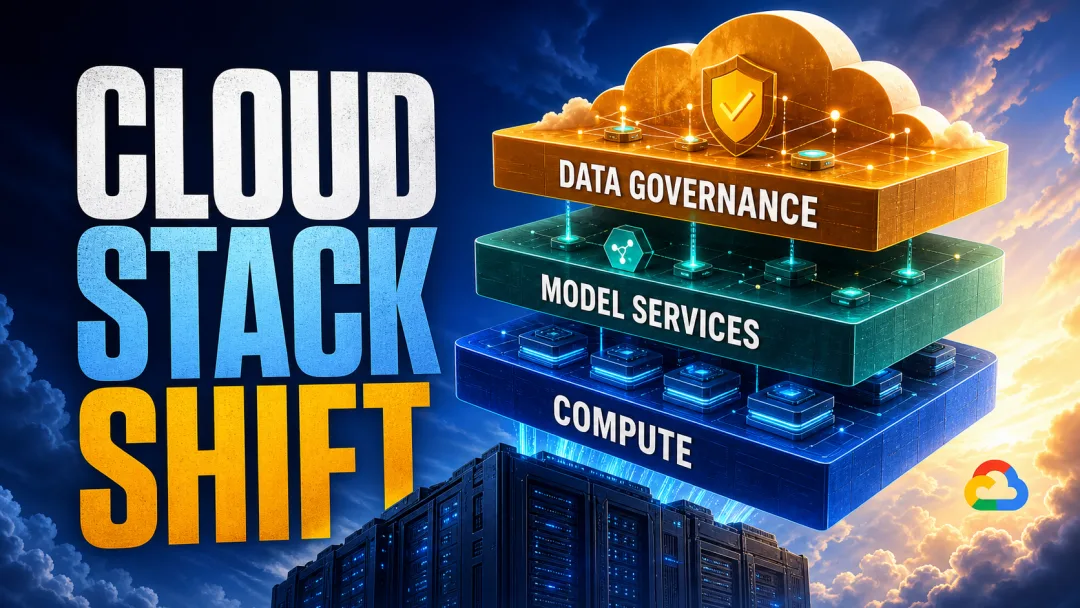
AI cloud platforms are becoming a full-stack decision: the useful comparison is no longer only which provider rents the most compute, but which platform connects infrastructure, models, data and operations for a real workload. In its July 29, 2026 ranking, AI Magazine places AWS first, Azure second and Google Cloud third, then mixes specialist compute and data-centric platforms into the rest of the list.
The ranking is an editorial market map, not a common benchmark. The ten entries do not sell the same product or expose identical infrastructure, so the list is most useful for showing the different layers businesses can buy into when they build and operate AI.
Definition: An AI cloud platform combines some mix of compute, data, model access, deployment tooling and operational controls for building or running AI systems.
Example: A company might use a hyperscaler for storage and identity, a managed model service for inference and a specialist GPU cloud for a large training run.
Key takeaway: The highest-ranked platform is not automatically the right platform for every AI workload.
Business impact: Platform choice determines how quickly a team can move from a model experiment to a governed production system, and how expensive it is to change course later.
How does the ranking divide the AI cloud market?
The list divides into three practical groups. AWS, Microsoft Azure and Google Cloud are broad cloud ecosystems with infrastructure, data services and managed AI tools. CoreWeave and NVIDIA DGX Cloud are more directly shaped around accelerated AI compute. Databricks and Snowflake put governed data and AI application workflows at the centre, while IBM Cloud and watsonx emphasize hybrid and multi-cloud deployment. That mix makes the ranking useful as a shortlist of platform models, not as a like-for-like performance table.
The difference matters because the platform closest to the bottleneck usually matters most. A model-training team may care about GPU availability and interconnects; an enterprise application team may care more about identity, data residency, monitoring and model choice. A business should therefore classify the workload before treating a ranking position as a purchasing signal.
1. Amazon Web Services: the broadest AI cloud starting point
AWS ranks first because AI Magazine describes it as combining cloud infrastructure, data services and AI tooling in one ecosystem. The source highlights Amazon Bedrock for foundation models and generative-AI applications, SageMaker for model development, and EC2 Trn1 instances powered by Trainium for deep-learning training. Takeaway: AWS is the broad-platform option to evaluate first when an AI workload must sit beside existing storage, networking and application services; AWS describes Bedrock as a production platform for generative-AI applications and agents.
2. Microsoft Azure: enterprise AI with model choice
Microsoft Azure ranks second and is described by AI Magazine as offering more than 200 products and services across a global data-center network. The source singles out Azure AI Foundry, which Microsoft now presents as Foundry, for model access, tools, safety and monitoring; Microsoft says the platform provides access to more than 11,000 models. Takeaway: Azure is especially relevant when AI must connect to Microsoft identity, data and governance systems rather than operate as an isolated model endpoint.
3. Google Cloud: AI infrastructure plus Gemini tooling
Google Cloud ranks third because its platform spans storage, analytics, AI and machine learning, hybrid deployment and multi-cloud services. AI Magazine highlights Gemini Enterprise Agent Platform, formerly Vertex AI, for prototyping and testing models, alongside Google’s AI Hypercomputer for frontier-model training. Takeaway: Google Cloud belongs on a shortlist when the workload needs an integrated data-and-AI environment; Google Cloud documents the platform as a place to build, train, evaluate and deploy models and agents. Background: Google Cloud revenue rose 82% to $24.8 billion.
4. Oracle Cloud Infrastructure: high-performance cloud services
Oracle Cloud Infrastructure ranks fourth in the source and is described as offering more than 200 AI and cloud services across public, dedicated and hybrid environments. AI Magazine also points to direct database integration with Microsoft Azure, high-performance interconnection and an expanded Google Cloud partnership. Takeaway: OCI is the entry to investigate when database proximity, bare-metal or hybrid deployment and high-performance networking outweigh the convenience of choosing the largest general-purpose ecosystem.
5. IBM Cloud and watsonx: hybrid control for enterprise AI
IBM Cloud and watsonx rank fifth as a combined platform for building, running and managing applications across hybrid and multi-cloud environments. AI Magazine highlights watsonx’s collaborative studio, APIs and software-development kits for custom generative-AI solutions. Takeaway: IBM’s position is about controlled deployment across existing enterprise environments, so it matters most when governance and infrastructure boundaries are part of the AI design rather than an afterthought.
6. CoreWeave: a cloud designed around AI compute
CoreWeave ranks sixth and is presented as a cloud purpose-built for scaling and accelerating generative AI. The source describes NVIDIA-heavy data centers and advanced workflows such as the NVIDIA Vera Rubin NVL72 supercomputer on CoreWeave’s cloud. Takeaway: CoreWeave represents the specialist-cloud path: evaluate it when accelerator capacity and AI-focused infrastructure are the main constraint, but compare the surrounding data, identity and application services separately.
7. Alibaba Cloud: an AI-integrated full-stack platform
Alibaba Cloud ranks seventh and is described as China’s leading cloud provider for computing and AI, with services spanning the full stack and the Qwen model family. AI Magazine says Alibaba offers more than 80 cloud-computing services and reports availability across 32 public regions and 104 availability zones. Takeaway: Alibaba Cloud shows that the AI-cloud market is not limited to the three large US hyperscalers; organizations should add geography, sovereignty and ecosystem fit to the technical comparison. Alibaba’s own AI and Data Intelligence overview describes an integrated cloud-native set of AI capabilities for enterprises and developers.
8. Databricks: data and AI on a governed foundation
Databricks ranks eighth as a unified data-and-AI platform for analytical and operational workloads. AI Magazine says it supports business intelligence, AI applications, secure data analysis and streaming across AWS, Azure and Google Cloud, while Databricks describes its platform as a way to connect enterprise data with different AI models and evaluate agent systems. Takeaway: Databricks is the data-centric option in this ranking, useful when the main challenge is turning governed enterprise data into production AI applications rather than sourcing raw compute alone. Related reading: 10 AI privacy tools for protecting sensitive data.
9. Snowflake AI Data Cloud: models inside the data boundary
Snowflake ranks ninth with Snowflake Cortex AI and built-in machine-learning support. The source emphasizes automated workflows and applications that can use secure data without moving it outside the organization’s perimeter, while also noting that Snowflake runs across AWS, Azure and Google Cloud. Takeaway: Snowflake’s role is to keep data, analytics and AI workflows close together, making it a platform to assess when data movement and governance are more important than owning a particular accelerator.
10. NVIDIA DGX Cloud: a proving ground for AI at scale
NVIDIA DGX Cloud ranks tenth as NVIDIA’s internal cloud environment for developing frontier and foundational models, validating system architectures and running production AI workloads. The source says it runs across cloud service providers and NVIDIA Cloud Partners; NVIDIA similarly describes DGX Cloud as an AI proving ground whose software and operating patterns are developed for demanding workloads and then applied across the wider ecosystem. Takeaway: DGX Cloud is a reference point for the NVIDIA-centered AI-factory model, not a substitute for evaluating every cloud provider that can host NVIDIA hardware.
What should operators take from the list?
The ranking’s most useful signal is that “AI cloud platform” now describes several buying decisions at once. A hyperscaler can provide the control plane around a model; a specialist provider can supply concentrated GPU capacity; a data platform can govern the information an AI application uses; and a hybrid platform can keep deployment aligned with existing infrastructure. That is different from the broader AI infrastructure market map, which includes hardware and physical-system providers as well as clouds.
A sensible shortlist should test five constraints: model and accelerator fit, data location, scaling and latency, governance and observability, and total operating cost. Total cost includes storage, network transfer, idle capacity and engineering time, not just an hourly compute price. Teams building agentic systems should also account for tool permissions and monitoring; the AI agent explainer covers why the model is only one part of an action-taking system.
The final decision is therefore workload-specific. AWS, Azure or Google Cloud may be the cleanest home for an AI application already connected to a broad enterprise stack. CoreWeave or NVIDIA DGX Cloud may fit concentrated training and accelerator demand. Databricks or Snowflake may be stronger when governed data is the central asset. The ranking is valuable when it sharpens that question instead of pretending that one platform wins every workload.
Frequently asked questions
Which cloud platform does AI Magazine rank first for AI workloads?
AI Magazine ranks Amazon Web Services first in its July 2026 cloud-platform list. The article points to AWS’s combination of infrastructure, data services and AI tools, including Amazon Bedrock for foundation-model and generative-AI applications, SageMaker for model development, and Trainium hardware for deep-learning workloads. That ranking is an editorial market view, not a universal buying recommendation: a business should still test the platform against its own data location, model, latency, governance and cost requirements before committing.
How is this cloud-platform ranking different from an AI GPU list?
The AI Magazine ranking mixes hyperscalers, specialist GPU infrastructure, data platforms and hybrid-cloud AI services. AWS, Azure and Google Cloud offer broad cloud ecosystems; CoreWeave focuses on AI-oriented compute; Snowflake and Databricks put data and AI workflows at the centre; and IBM Cloud with watsonx emphasizes hybrid and multi-cloud operations. The list therefore describes places where organizations can build, run or manage AI, rather than comparing equivalent GPU instances on one benchmark.
What should a business compare before choosing an AI cloud platform?
Compare the workload path, not only the provider name. Check whether the platform supports the required model and accelerator, where training data and logs will live, how inference scales, what governance controls are available, and which services reduce or add operational work. Also measure storage, network transfer, idle capacity and engineering effort alongside compute price. A short proof of concept using representative prompts or training jobs is more reliable than assuming that a high position in a general ranking guarantees the best result for a specific business.
Are the ten platforms interchangeable?
No. AWS, Azure and Google Cloud are broad infrastructure and application ecosystems, while CoreWeave is purpose-built around AI compute. Snowflake and Databricks are data-centric platforms that run across major clouds, and NVIDIA DGX Cloud is an NVIDIA environment for developing and operating AI at scale. The differences affect portability, integration, governance and the amount of infrastructure a team must operate. Treat the ranking as a map of platform types, then shortlist services that match the workload’s limiting constraint.
Alex
Founder & Lead AI Writer
Alex is the founder of Yowox and lead AI writer since 2024, breaking down complex information into clear, actionable insights for thousands of readers every day. Alex has built AI automation systems for businesses since 2024, focusing on AI agents, workflow automation, and business process optimization.
Save hours. Save thousands.
Practical guides, real workflows, and the latest AI and automation news that matters — straight to your inbox.