 By Alex
 NotebookLM becomes Gemini Notebook, with code execution
Google is renaming NotebookLM to Gemini Notebook while keeping its research focus and adding deeper analysis, code execution and wider Gemini ecosystem access.
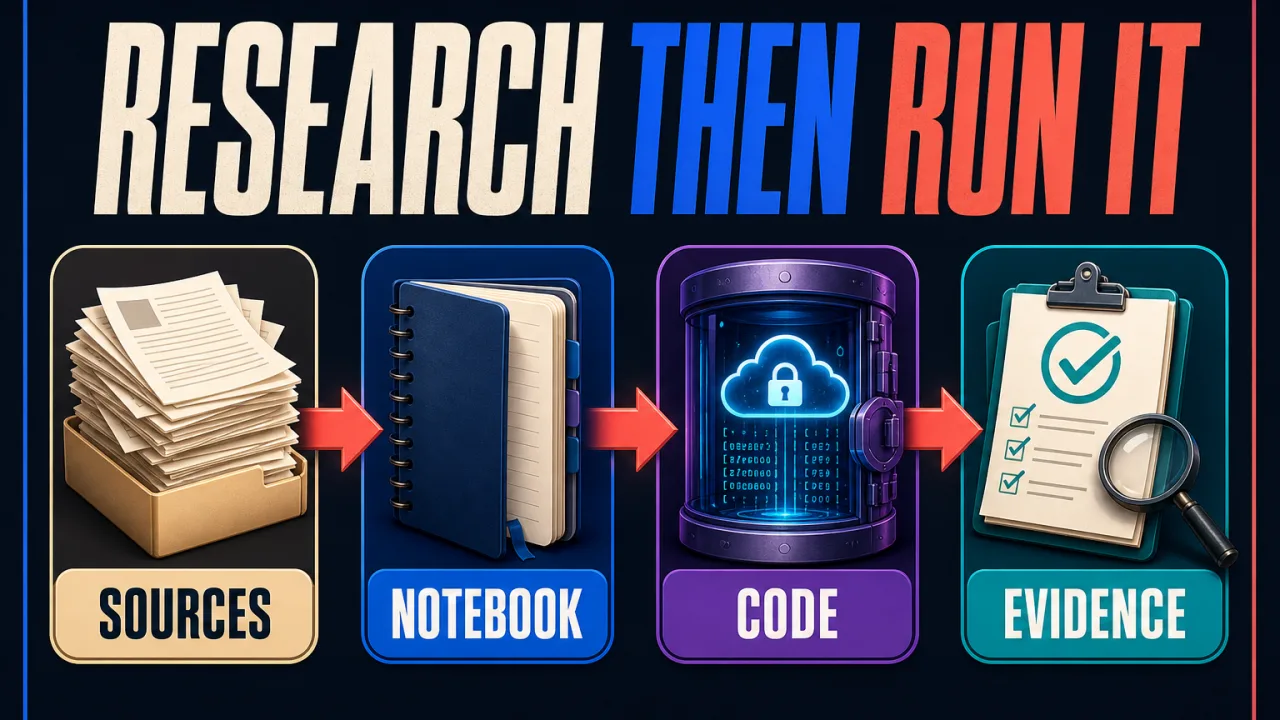
NotebookLM is now Gemini Notebook. Google is changing the name of its source-grounded research tool and previewing a larger role for it inside the Gemini ecosystem, according to 9to5Google’s report.
The rebrand is more than a cosmetic label change. Google says Gemini Notebook will remain a standalone product focused on research, while becoming more connected to Google’s broader AI surfaces. Notebooks are already used in the Gemini app for organizing chats and collecting work, and Google says they will soon be available in Search’s AI Mode. More on this: Gemini app plans after AI Studio cancellation.
Google also previewed a major capability upgrade for AI Pro subscribers: each notebook will receive a secure cloud computer that can write and execute code for complex data analysis grounded in the user’s sources.
Definition: Gemini Notebook is Google’s source-grounded research workspace, formerly known as NotebookLM, designed to help users analyze and generate work from selected reference material.
Example: A user can collect a set of reports in a notebook, ask questions about those sources and eventually use a secure cloud computer to run code against the grounded material.
Key takeaway: Google is turning a focused research product into a platform surface for source-grounded analysis across Gemini.
Business impact: The value of AI research tools is moving from chat answers toward evidence-linked analysis, reusable workspaces and controlled computation.
Why Google is changing the name
NotebookLM began as Project Tailwind at Google I/O 2023 before taking the NotebookLM name near launch. Google now says “Gemini Notebook” is friendlier than putting “language model” in the product name and makes the connection to Gemini explicit.
That logic reflects Google’s current product strategy. Gemini is becoming the umbrella identity for Google’s AI experiences, while specialized features can live inside the same family. The renaming makes NotebookLM easier to discover for people who already know Gemini, but it also creates a product-positioning challenge: the research tool must remain distinct enough that users understand why it is not simply another Gemini chat.
Google appears to be preserving that distinction. The company describes Gemini Notebook as a standalone product focused on being a premier research tool. The brand changes; the source-grounded promise remains central.
The important part is still the source boundary
A general chatbot begins with an open-ended model context. A research notebook begins with a selected body of material. That difference changes what the user can ask, what evidence the system can cite and how the resulting work should be evaluated.
The practical advantage of a notebook is not merely that it stores files. It creates a boundary around a project:
- the sources are collected in one place;
- questions can be asked against that collection;
- outputs can be compared with the reference material;
- the work can be revisited without rebuilding context from scratch;
- later analysis can be tied to the same evidence set.
That makes Gemini Notebook closer to a research workspace than a generic assistant. Google’s broader AI automation stack still applies: the model is only one layer, while context, tools, workflow, permissions and observability determine whether an AI system is useful in practice.
The rebrand will succeed if Google makes this mental model clearer rather than hiding it behind the Gemini name.
A cloud computer changes the ceiling
The most consequential announcement is the planned secure cloud computer for each notebook. Google says the environment will be able to write and execute code for complex data analysis grounded in a user’s sources.
That is a meaningful step beyond asking a model to summarize a document. It gives the notebook an execution environment in which it can transform source material, calculate results and produce new output formats.
A research workflow might eventually look like this:
- Collect reports, tables or papers in a notebook.
- Ask Gemini Notebook to identify the relevant fields and assumptions.
- Generate code for a specific analysis.
- Execute that code in the notebook’s secure cloud computer.
- Inspect the result against the original sources.
- Export a chart, table, memo or other output.
The important phrase is “grounded in your sources.” Code execution is powerful, but its usefulness depends on whether the system selects the right material, preserves provenance and makes its transformations visible.
A wrong answer in a summary is a quality problem. A wrong calculation executed over an incorrectly interpreted dataset can become a decision problem. The product therefore needs more than a sandbox: it needs clear evidence trails and a way for users to inspect what the code did.
Gemini 3.5 and Antigravity are coming to AI Pro
Google also previewed the Gemini 3.5 and Antigravity upgrade for Google AI Pro subscribers. The upgrade had begun rolling out to AI Ultra users, and Google said it would come to AI Pro users on the web over the coming weeks.
The announcement positions the upgrade as a deeper analysis system, with entirely new output formats and more capable source-grounded work. The report does not establish that every feature will be available on every plan or platform immediately, so “coming to AI Pro” should be read as a rollout announcement rather than a completed availability claim.
That distinction matters for users choosing between plans. A product can be renamed today while its most advanced computation features arrive gradually. Access, timing and output limits may shape whether Gemini Notebook feels like a serious research environment or simply a more polished document chat tool.
From one app to an ecosystem surface
Google says notebooks are already available in the Gemini app for chat organization and collecting work. It also plans to make notebooks available in Google Search’s AI Mode.
The Search integration is strategically significant. A notebook that begins as a deliberate research space is one kind of product. A notebook that can be created or accessed while searching becomes an organizing layer for ongoing questions.
That could make research more continuous:
| Surface | Potential role |
|---|---|
| Gemini Notebook | Source-grounded research and analysis workspace |
| Gemini app | Chat organization and collecting work in notebooks |
| Google Search AI Mode | Discovery and notebook access during search |
| Secure cloud computer | Code execution and complex analysis inside a notebook |
| Gemini brand | Shared identity across Google AI experiences |
The risk is fragmentation. Users need to know whether a notebook created in Search behaves like one created in the standalone product, which sources are available in each context and how permissions carry across surfaces.
Scale raises the trust requirement
Google said Gemini Notebook is used by more than 30 million people and over 600,000 organizations. Those figures show significant reported reach, but they are company-provided metrics and should not be treated as an independent market audit.
At that scale, source-grounded AI has to work for more than casual experimentation. Organizations will care about document access, sharing, retention, data boundaries, audit trails and output review. Individual researchers will care about whether citations are accurate, whether summaries preserve nuance and whether generated analysis can be reproduced.
The cloud-computer feature makes these questions more urgent. Once a notebook can execute code, users need to understand:
- which files the code can access;
- whether the environment is isolated per notebook;
- how outputs and intermediate files are retained;
- whether code execution requires confirmation;
- how errors and unsupported assumptions are surfaced;
- what happens when a source is updated or removed.
The word “secure” is a product promise, not a complete explanation. Trust will come from visible controls and inspectable behavior.
The rebrand’s real test
The new name gives Google a chance to explain Gemini Notebook as a distinct category: not just a chatbot with uploads, but a persistent evidence workspace that can reason, calculate and produce research artifacts.
That positioning will require discipline. A source-grounded notebook should distinguish between what appears in the sources, what the model infers and what code calculates. It should make it easy to move backward from an output to the supporting passages, inputs and transformations.
The strongest version of this product is not the one that generates the most impressive answer. It is the one that lets a researcher move from a question to a defensible result without losing the chain of evidence.
The bottom line
NotebookLM becoming Gemini Notebook is a brand consolidation, but the more important news is the product’s expanding role. Google wants a standalone research tool that connects to Gemini, Search and a secure execution environment.
If Google delivers that well, Gemini Notebook could become a bridge between document chat and real analytical work. Users would bring their own evidence, ask questions, run controlled computations and generate outputs that remain tied to the source set.
The challenge is not only making the tool more capable. It is preserving the source boundary and making every important step inspectable as the notebook gains access to more surfaces and more computation.
The name may be shorter and more familiar. The product’s next test is whether it can make research more rigorous, not merely more conversational.
FAQ
Is Gemini Notebook a new product?
It is the new name for NotebookLM. Google says it remains a standalone research-focused product while becoming more connected to the Gemini ecosystem.
Can Gemini Notebook run code?
Google previewed a secure cloud computer for each notebook that can write and execute code for complex data analysis grounded in the notebook’s sources. The upgrade is planned for Google AI Pro subscribers on the web over the coming weeks.
Will Gemini Notebook appear in Google Search?
Google says notebooks will soon be available in Search’s AI Mode. The exact rollout and feature behavior may vary as the feature becomes available.
Does the rename change NotebookLM’s source-grounded focus?
Google’s announcement says the product remains focused on research and user-provided sources. The main change is stronger integration with the Gemini brand and ecosystem.
Are Google’s usage figures independently verified?
No. The figures of more than 30 million people and over 600,000 organizations were shared by Google and should be treated as company-reported metrics.
Frequently asked questions
What is NotebookLM called now?
Google is renaming NotebookLM to Gemini Notebook. The product remains a standalone research tool focused on working with user-provided sources, but Google is tying it more closely to the broader Gemini brand and ecosystem.
What new features are coming to Gemini Notebook?
Google previewed deeper analysis, new output formats and a secure cloud computer for each notebook that can write and execute code for complex data analysis grounded in the user’s sources. The Gemini 3.5 and Antigravity upgrade is planned for Google AI Pro subscribers on the web over the coming weeks.
Will Gemini Notebook replace notebooks in the Gemini app?
No. Google describes Gemini Notebook as a standalone research product, while notebooks in the Gemini app are used for chat organization and collecting work. Google also plans to make notebooks available in Search’s AI Mode.
How many people use Gemini Notebook?
Google said the product is used by more than 30 million people and over 600,000 organizations. Those figures are Google’s own announcement metrics, not an independently audited market measurement.
Alex
Founder & Lead AI Writer
Alex is the founder of Yowox and lead AI writer since 2024, breaking down complex information into clear, actionable insights for thousands of readers every day. Alex has built AI automation systems for businesses since 2024, focusing on AI agents, workflow automation, and business process optimization.
Save hours. Save thousands.
Practical guides, real workflows, and the latest AI and automation news that matters — straight to your inbox.