 By Alex
 GPT-Live lets ChatGPT listen and speak at once
OpenAI's new GPT-Live-1 and GPT-Live-1 mini voice models use a full-duplex architecture that lets ChatGPT listen while it talks, handle natural interruptions, and quietly hand off hard questions to GPT-5.5 in the background.
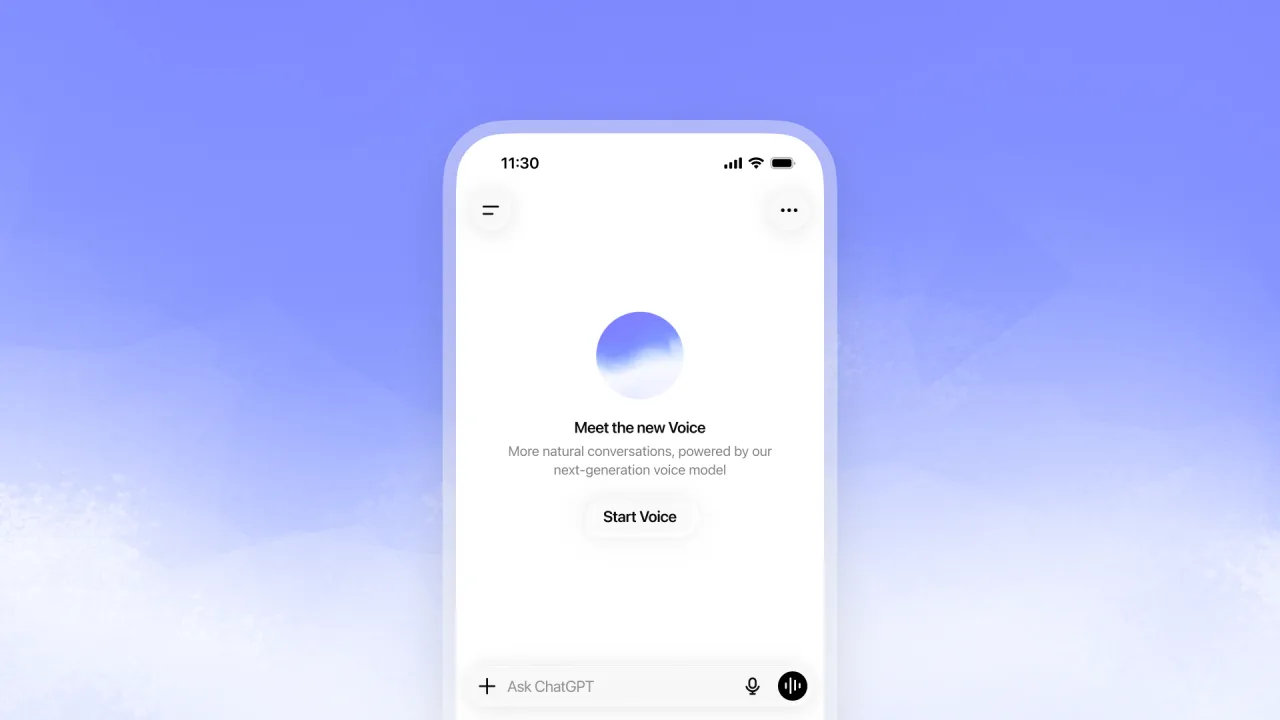
OpenAI released GPT-Live-1 and GPT-Live-1 mini on July 8, 2026 — new voice models built on a full-duplex architecture that lets ChatGPT listen and speak simultaneously, replacing the previous Advanced Voice Mode across iOS, Android, and the web.
Definition: GPT-Live is a full-duplex voice architecture — it processes incoming audio continuously while generating its own output, deciding many times per second whether to speak, keep listening, pause, or interrupt.
Example: Instead of waiting for a pause to respond, GPT-Live can back-channel with a quiet "mhmm" while the user is still talking, then jump in only when there's actually something to say.
Key takeaway: The old voice pipeline was three separate steps — speech-to-text, then a text response, then text-to-speech; GPT-Live merges that into one continuous process and quietly hands off harder questions to a full reasoning model in the background.
Business impact: Voice interfaces built on ChatGPT should start feeling less like a walkie-talkie exchange and more like an actual conversation — worth re-testing any voice-based support or assistant flow built against the old Advanced Voice Mode.
What exactly changed from the old Advanced Voice Mode?
The previous system ran a three-step pipeline in sequence: transcribe speech to text, generate a text response, then convert that back to speech — a structure that made natural interruption and overlapping speech difficult by design. GPT-Live replaces that with an integrated full-duplex model that processes audio input and generates output at the same time, making a fresh decision every fraction of a second about whether to talk, listen, pause, or interrupt. OpenAI's product lead described testing it with "30- to 40-minute-long conversations" during walks, framing the goal as sustained, natural dialogue rather than short question-and-answer exchanges.
How does GPT-Live handle questions that need real thinking?
A voice model built for fast back-and-forth isn't necessarily built for deep reasoning, so GPT-Live handles that tension by delegating: when a question needs web search, multi-step reasoning, or otherwise more complex work, GPT-Live quietly hands it off to a frontier model running in the background — GPT-5.5 at launch — and keeps the conversation going naturally while that computation happens, bringing the answer back in once it's ready. That hand-off is functionally the same pattern covered in what an AI agent actually is: a fast, conversational layer deciding when a task needs to be routed to a more capable process rather than handled directly. See also Anthropic updates Claude voice mode with more capable models.
Who gets which model, and when?
GPT-Live-1 mini becomes the new default for ChatGPT Free users, replacing Advanced Voice Mode automatically; GPT-Live-1, the larger of the two, is available to Go, Plus, and Pro subscribers. The rollout covers iOS, Android, and ChatGPT.com starting July 8, 2026, and — since ChatGPT already integrates with CarPlay — the update reaches cars using that integration too. Alongside the new voice models, OpenAI is adding near real-time speech translation and visual cards that can show information like weather, stock prices, or sports scores on screen instead of reading every detail aloud.
What's still missing or rough at launch?
GPT-Live doesn't yet support combining voice with video or screen sharing inside ChatGPT — OpenAI says that capability is coming, without a specific date. The new translation feature also isn't fully polished across languages yet: a demo of Hindi translation reportedly came out with a heavy American accent and unnatural phrasing, a reminder that a feature announced globally doesn't necessarily perform evenly across every language on day one. Developer and enterprise access through the API hasn't shipped either — OpenAI is only collecting signups for a notification list, with no confirmed release timeline.
Frequently asked questions
What is GPT-Live?
GPT-Live is OpenAI's new generation of ChatGPT voice models, announced July 8, 2026. It replaces the previous Advanced Voice Mode with a full-duplex architecture that lets it listen and speak at the same time, instead of the old sequential speech-to-text, then response, then text-to-speech pipeline.
What's the difference between GPT-Live-1 and GPT-Live-1 mini?
GPT-Live-1 mini is the new default for ChatGPT Free users; GPT-Live-1, the larger model, is available to Go, Plus, and Pro subscribers. Both replace the old Advanced Voice Mode; the difference is model size and reasoning quality, not the underlying full-duplex mechanism.
How does GPT-Live handle questions that need real reasoning?
For questions requiring web search, deeper reasoning, or more complex work, GPT-Live delegates the task to a frontier model running in the background — GPT-5.5 at launch — and continues the conversation naturally while that computation happens asynchronously, bringing the result back in once it's ready.
What can't GPT-Live do yet?
At launch, GPT-Live doesn't support voice conversations combined with video or screen sharing in ChatGPT — OpenAI says that's coming. Early demos of the new real-time translation feature also showed rough edges in non-English languages, including an unnatural accent in a Hindi translation demo.
Is GPT-Live available through OpenAI's API?
Not yet at launch. OpenAI is only taking signups from developers and enterprises who want to be notified when GPT-Live becomes available through the API — there's no confirmed timeline for that release yet.
Alex
Founder & Lead AI Writer
Alex is the founder of Yowox and lead AI writer since 2024, breaking down complex information into clear, actionable insights for thousands of readers every day. Alex has built AI automation systems for businesses since 2024, focusing on AI agents, workflow automation, and business process optimization.
Save hours. Save thousands.
Practical guides, real workflows, and the latest AI and automation news that matters — straight to your inbox.