 By Alex
 Agentic orchestration: Enterprise AI organizations have a deployment problem, not a platform problem — and most are calling chatbots agents
VentureBeat’s survey of 101 enterprises finds orchestration ambition running ahead of deployment reality: most so-called agents are still chatbot wrappers.
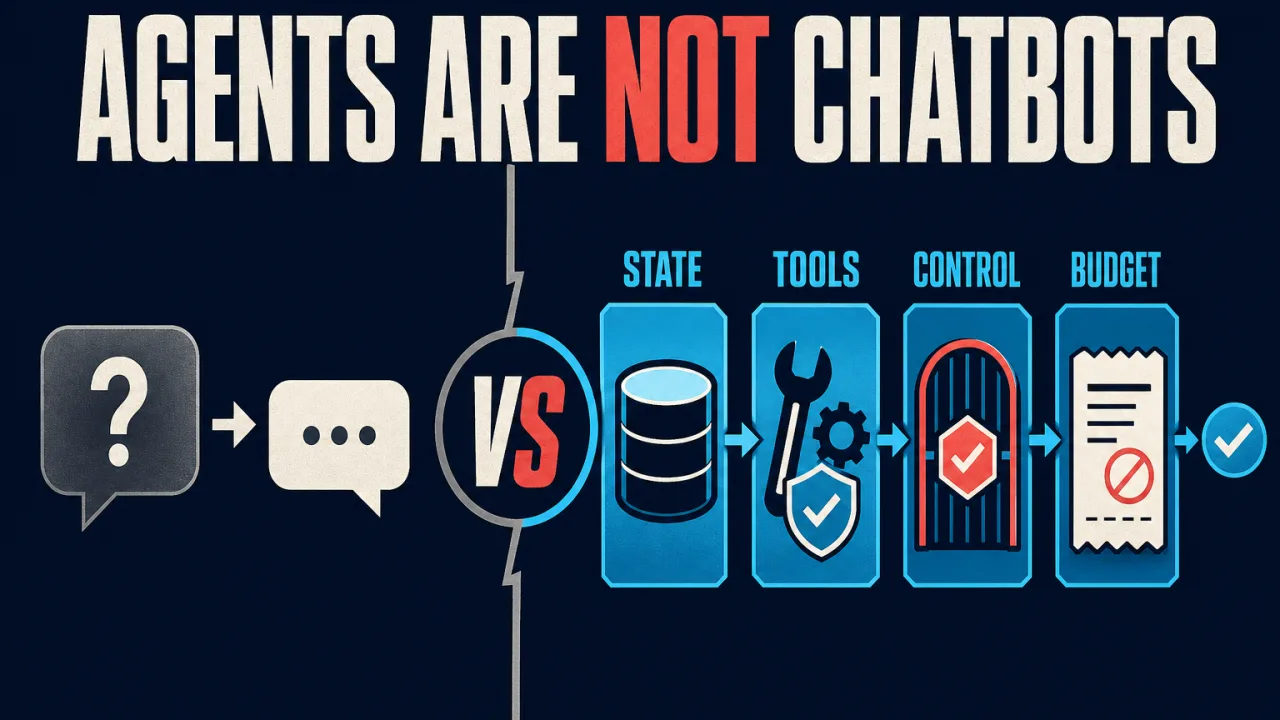
Enterprise AI has an orchestration problem—but it is not primarily a platform shortage. The platforms are arriving, budgets are being allocated and control-plane architectures are being debated. The harder problem is that many systems labeled “agents” are still single-prompt chatbot wrappers.
That is the central finding in VentureBeat’s latest Pulse Research report, which surveyed 101 enterprises about agent orchestration, platform selection, control planes, deployment maturity and cost control.
Definition: Agentic orchestration coordinates a multi-step task across model decisions, tools, state, permissions, failures and completion—not just a single chat response.
Example: A support agent that retrieves an account, checks policy, calculates an adjustment, asks for approval and records the result is orchestrated. A chatbot that drafts a reply from one prompt may be useful, but it is not the same system.
Key takeaway: Buying an orchestration platform does not make an organization’s existing chatbots agentic.
Business impact: Teams that measure platform adoption instead of completed multi-step work can mistake infrastructure readiness for deployment maturity.
The chatbot trap
VentureBeat reports that 71% of surveyed enterprises said a quarter or fewer of their deployed “agents” are true multi-step orchestrated workflows. Only 10% said more than half of their agents had crossed that threshold.
The result should be read as a directional snapshot of one survey wave, not as a precise estimate of every enterprise. But the gap is strategically important. Organizations are building the layer intended to run advanced workflows before they have deployed many advanced workflows.
A chatbot wrapper can be the right first step. It may answer questions, summarize information or draft content with a model call. The problem begins when the wrapper is counted as an agent in portfolio reports, investment cases and board updates without the capabilities that make orchestration necessary.
A genuine multi-step system needs to do some combination of the following:
- choose or follow a sequence of steps;
- call approved tools and external systems;
- carry relevant state across steps;
- validate results and recover from failures;
- respect identity and permission boundaries;
- escalate when it cannot safely continue;
- produce an audit trail;
- stop when it reaches a time, action or cost limit.
The label is less important than the contract. If a system cannot show what it did between input and outcome, it is probably still a conversational interface rather than an operational agent.
Platforms are consolidating anyway
The survey describes a market consolidating around model-provider platforms. Anthropic’s Claude was the primary platform for 40% of respondents, followed by Microsoft at 18% and OpenAI at 13%. Together with Google and Amazon, the major model providers accounted for roughly four-fifths of deployments in the reported sample.
That concentration is understandable. Model gravity matters. Organizations often want the orchestration layer close to the model they already prefer, with native tools, identity integrations, observability and deployment support in one place.
But platform concentration does not settle the control-plane question. The same enterprise may use a provider-native runtime for some workflows, an external gateway for permissions and cost, and an internal system for policy, audit and routing.
This is why the platform choice and deployment problem should be separated:
| Question | What it measures |
|---|---|
| Which platform are we using? | Where model and orchestration capabilities are currently concentrated |
| What can our agent actually do? | Deployment maturity and workflow complexity |
| Who controls execution? | Permissions, routing, policy and portability |
| Can we prove the outcome? | Reliability, auditability and evaluation |
| Can we stop it? | Runtime safety and fiscal control |
A company can have a clear answer to the first question and no credible answer to the others.
Reliability is the real definition of success
Respondents judged orchestration primarily by task completion reliability at 32%, followed by multi-step workflow management at 28%. Together, those two criteria represented 59% of responses.
Developer productivity was secondary at 17%, while end-user experience and operational stability were lower in the reported ranking. That ordering makes sense for internal execution systems: enterprises care whether the workflow finishes correctly and repeatedly, not simply whether engineers can assemble a demo quickly.
It also exposes the chatbot trap. Organizations say they value dependable multi-step completion, yet most of their deployed agents do not perform much multi-step work.
A useful maturity test asks whether the system can complete a task under normal pressure:
- The input is incomplete or ambiguous.
- A tool returns an error or stale data.
- The agent needs to retry or choose another route.
- A permission boundary blocks an action.
- The workflow must pause for human approval.
- The final result must include evidence and an audit record.
If the system only works when the prompt is perfect and every tool responds immediately, the organization has an assistant prototype—not a reliable agent workflow.
The case for a hybrid control plane
By the end of 2026, 51% of surveyed enterprises expected a hybrid control plane that combines provider-native and external orchestration. Only 6% expected to hand control entirely to a provider-managed service.
The reason is vendor lock-in. When the provider owns orchestration logic, identity, permissions, memory, audit logs, cost controls and workflow state, switching models can become an infrastructure migration rather than an API change.
A hybrid architecture does not mean building everything twice. It means deciding which responsibilities should remain portable and independently governed:
- Model layer: provider models and inference endpoints.
- Execution layer: durable steps, retries, timeouts and state.
- Policy layer: identity, permissions, approval and data boundaries.
- Evaluation layer: task success, quality and failure criteria.
- Economic layer: budgets, token routing and hard stops.
- Audit layer: trace, actions, evidence and accountability.
The right boundary depends on the workflow. A low-risk internal summarizer may need only modest external control. An agent that changes records, sends money, communicates with customers or runs continuously needs much more independence from the model provider.
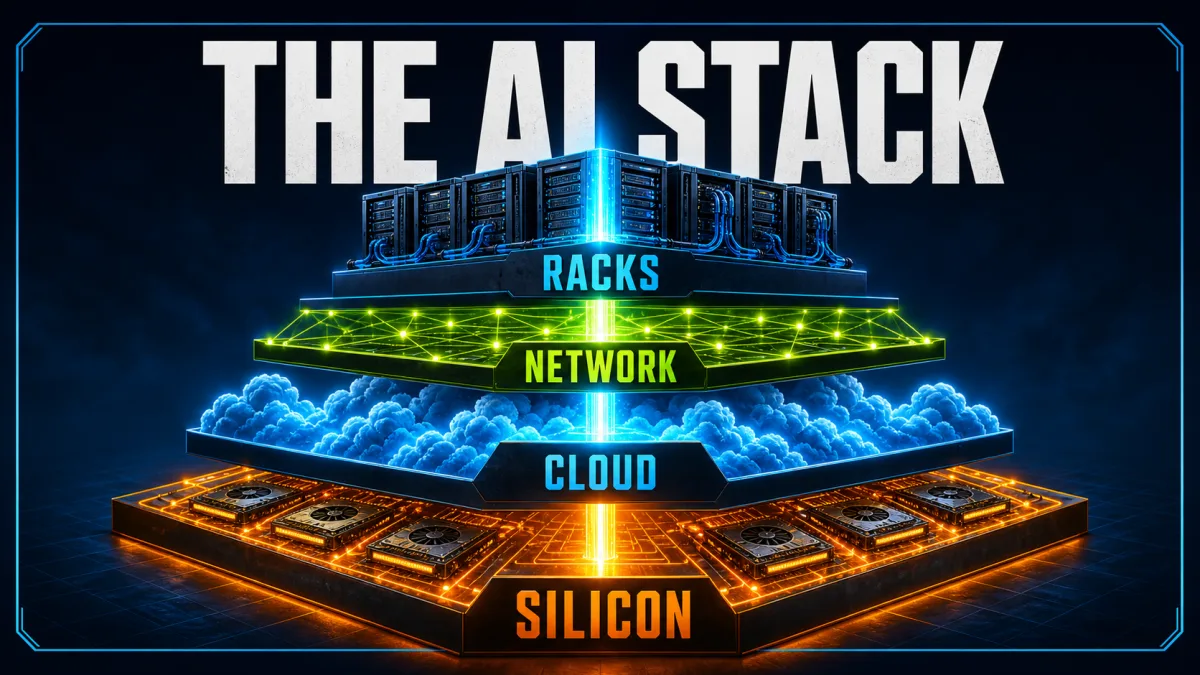
The AI automation stack is useful here because orchestration is only one layer. Context, tools, permissions, monitoring and a clear workflow contract determine whether the platform can produce dependable work.
Investment is going to tooling, but cost control lags
VentureBeat reports that agent workflow tooling led planned investment at 34%, followed by security and permissions enforcement at 25%. That spending pattern shows that enterprises understand the need for more than a model call.
But fiscal control remains uneven. More than a quarter of respondents—27%—reported having no real-time way to stop a runaway agent before the bill arrives.
This is not a minor operations detail. Agents can loop, retry, call multiple tools and route across models. A failure that would be one expensive request in a chatbot can become a chain of expensive requests in an agent runtime. Related reading: Stop Prompting Claude Code, Start Engineering Loops.
Every production agent should have at least:
- a maximum step count;
- a time limit;
- a token or compute budget;
- per-tool permissions;
- a circuit breaker;
- an operator-visible trace;
- a policy for human escalation;
- a way to disable or revoke the workflow quickly.
Native provider caps are useful, but they should not be the only control. External gateways, routing policies and workflow-level budgets make it possible to stop or redirect an agent even when the model provider’s own limits are too coarse.
Deployment maturity is the missing discipline
The survey’s numbers suggest that enterprise teams have solved one problem before solving another. They have identified where the platform could live, but not always which work should run on it.
A deployment program should begin with workflow selection, not platform selection. Pick a process with clear inputs, bounded actions, measurable completion and a risk level the organization can manage. Build the smallest complete system around it. Then add complexity only when the workflow demonstrates a real need.
A practical rollout sequence looks like this:
Start with a bounded workflow
Choose one task with a clear definition of done. Avoid beginning with “general agent” as the product requirement. A narrow process reveals tool, state and policy requirements much faster.
Prove multi-step value
Show that multiple steps are necessary and that the system completes them more reliably or economically than the baseline. If one prompt and a human review are enough, do not force orchestration into the design.
Add durable execution
Persist state, step status, tool results and approvals. A deployment that loses its place after a restart is not ready for long-running work.
Add policy and budgets before autonomy
Permissions, approval and stop mechanisms should arrive before the agent receives broad write access. Prompt instructions are not a replacement for hard access controls.
Evaluate the portfolio honestly
Count how many systems actually call tools, manage state, recover from failures and complete multi-step workflows. Keep chatbot wrappers in the portfolio if they are useful, but do not report them as autonomous agents.
What enterprises should ask vendors
The platform debate becomes more productive when buyers ask operational questions rather than comparing feature lists:
- Can we export traces, state and evaluation results?
- Where are permissions enforced—in prompts, tools, gateway policy or identity systems?
- Can an operator stop a workflow in real time?
- Are budgets enforced per task, user, workflow and tenant?
- What happens when a tool times out halfway through a run?
- Can we change the model without rewriting the workflow?
- How are human approvals represented in the audit trail?
- What is the failure and escalation behavior when the model is uncertain?
- Which parts are provider-native and which remain under our control?
The answers define the operating relationship more clearly than the name of the orchestration framework.
The bottom line
Enterprise AI organizations do not necessarily need another platform. They need to deploy fewer, better-defined agents and prove that those systems can complete multi-step work reliably, safely and within a controlled budget.
The orchestration layer is real. The deployment maturity is uneven. Calling a chatbot an agent hides the exact work that still needs to be done: state management, tool reliability, permissions, evaluation, auditability and fiscal control.
The next phase of enterprise AI should be measured by the percentage of deployed systems that can complete a defined workflow—not by the number of agent platforms purchased or the number of assistants renamed.
If the 71% figure falls in future survey waves, the market will have evidence that orchestration infrastructure is becoming real operational capability. Until then, the honest diagnosis is simple: the stack is being built ahead of the agents.
FAQ
Is a chatbot wrapper useless?
No. A chatbot can be a useful product and a sensible first step. The problem is treating it as equivalent to a multi-step agent when reporting maturity, risk, cost and deployment progress.
Does every agent need a hybrid control plane?
No. The right architecture depends on risk, workflow duration, tool access, portability requirements and operating scale. Hybrid control becomes more valuable when agents affect multiple systems or when the organization cannot accept provider lock-in.
Why are permissions important for agent orchestration?
Agents can choose tools and take actions, so a prompt telling them not to do something is not a sufficient access boundary. Identity, least privilege, approvals and policy enforcement should be implemented outside the model’s conversational instructions.
How should an organization measure agent maturity?
Measure the share of systems that complete defined multi-step workflows, preserve state, use approved tools, recover from failures, respect permissions, produce audit evidence and operate within a budget. Also track how often humans correct or finish the work.
What is the first step toward real agent deployment?
Choose one bounded workflow with a measurable outcome and build the smallest complete system around it. Prove that orchestration adds value before expanding the platform or granting broader autonomy.
Frequently asked questions
What is the enterprise agent deployment problem?
Many enterprises have selected orchestration platforms and invested in workflow tooling, but most deployed systems still behave like single-prompt chatbot wrappers rather than true multi-step agents that manage state, call tools, handle failures and complete workflows.
What did VentureBeat’s survey find about deployed agents?
In VentureBeat’s directional survey of 101 enterprises, 71% said a quarter or fewer of their deployed agents are true multi-step orchestrated workflows, and only 10% said more than half of their agents had crossed that threshold.
Why do enterprises prefer hybrid agent control planes?
A hybrid control plane combines provider-native capabilities with an external orchestration and governance layer. Enterprises want model-provider advantages without putting permissions, auditability, cost controls and future portability entirely inside one vendor’s platform.
What should count as a real AI agent?
A real agent should do more than generate a response. It should be able to manage a defined multi-step task, use approved tools, preserve relevant state, handle errors and escalation, respect permissions, produce an audit trail and stop within a controlled budget.
Alex
Founder & Lead AI Writer
Alex is the founder of Yowox and lead AI writer since 2024, breaking down complex information into clear, actionable insights for thousands of readers every day. Alex has built AI automation systems for businesses since 2024, focusing on AI agents, workflow automation, and business process optimization.
Save hours. Save thousands.
Practical guides, real workflows, and the latest AI and automation news that matters — straight to your inbox.