 By Alex
 Meta Removes Instagram AI Photo Remix Feature After Backlash
Meta has removed a Muse Image feature that let users generate AI images from public Instagram photos after criticism over consent, notification and misuse.
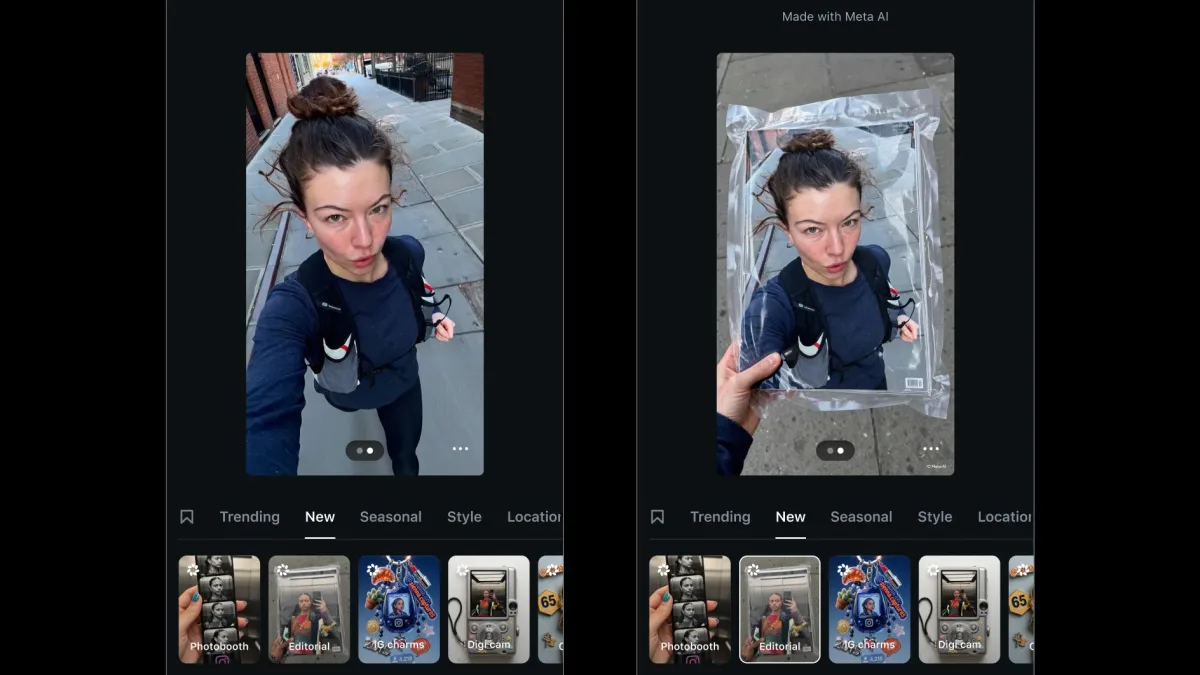
Meta removed a Muse Image feature that let users create AI images from public Instagram photos after backlash over consent and misuse. The reversal came on July 10, 2026, only days after Meta launched Muse Image and promoted a way to reference public Instagram accounts through an @-mention. Meta's update says the feature “missed the mark” and is no longer available.
Definition: Meta's removed feature connected Muse Image with public Instagram photos, allowing another user to reference an account in an AI-generated image.
Example: A person could @-mention a public Instagram account inside Meta AI and use that account's photos as source material without notifying the account owner.
Key takeaway: Meta kept its broader Muse Image and Instagram Stories rollout but reversed the specific public-photo remix capability.
Business impact: Creators and brands should treat AI image permissions as a product-design and reputation issue, not merely a settings detail.
What did Meta remove from Instagram?
Meta removed the part of Muse Image that allowed users to reference public Instagram accounts when generating images. The feature was not a separate standalone app; it was one capability inside Meta's broader AI image-generation rollout. TechCrunch reported that the feature could modify photos from public accounts and that users were not designed to receive an alert when their images were used.
The timing matters. Meta announced Muse Image on July 7, then published an opt-out guide and faced criticism almost immediately. Our earlier Muse Image launch explainer covers the model's broader capabilities and the original privacy concern. The company reversed the controversial capability three days later, while leaving the rest of the product launch in place.
Why did the AI photo feature trigger backlash?
The central problem was not that Muse Image could edit photos; it was that the feature made another person's public image available for AI remixing without a clear consent event. Public visibility is not the same thing as permission to generate new representations of a person, especially when the person receives no notification and may not know the control exists.
The design also created an asymmetry: the person creating the image got a new creative shortcut, while the person depicted had to discover an opt-out setting and disable it. TechCrunch reported that the reversal followed scrutiny from users and talent agencies, including CAA, as concerns grew about impersonation, harassment and nonconsensual edits.
Did Meta remove all Muse Image effects?
No. Meta's official Instagram announcement says that more than 30 Muse Image-powered effects remain available for Instagram Stories in the United States. Those effects include preset transformations, prompt-based editing and a redesigned browser that lets users preview effects before applying them to photos.
That distinction is important for businesses using Instagram. Meta has not abandoned AI-assisted creation in Stories; it has removed one social-graph feature that connected a user's generation workflow to another person's public account. The product direction remains active even after the consent design was pulled back.
What does the reversal say about AI product launches?
Meta's reversal shows that an AI feature can be technically simple and still be commercially risky when it crosses from editing a user's own content into generating content about someone else. The removed capability combined three sensitive elements: a real person's likeness, a low-friction generation interface and no notification to the source account.
For platforms, the practical lesson is that an opt-out control may not be enough when the default behavior affects a third party. A safer launch sequence would make the affected person’s permission, notification or exclusion explicit before the generation happens. The backlash arrived quickly because users could understand the risk without needing to test the underlying model.
For creators, the immediate lesson is narrower: public posting still increases exposure to copying, remixing and impersonation across the internet, but platform-level AI tools can change the scale and speed of that exposure. Meta's removal reduces one specific pathway; it does not eliminate broader risks from screenshots, downloads or other image-generation systems.
What should Instagram users and brands do now?
Users should still review Instagram's Sharing and Reuse settings rather than assume that removing one Muse Image feature settles every future use of their content. Meta's own announcement says the mobile setting can control whether people may create with Instagram content using Meta AI features. Related reading: Introducing Muse Image and Muse Video. Background: Grok Imagine Image 2.0 makes image editing practical.
Brands and creators should add AI-remix scenarios to their content-governance checklist. That means monitoring impersonation reports, documenting original assets, clarifying internal approval for synthetic edits and deciding how quickly the team will respond if a generated image misrepresents a person or product. The removal of one feature is a useful warning: consent expectations can become a launch blocker even after a product is already live.
What remains uncertain?
Meta has not said whether it will redesign and relaunch the feature with stronger consent or notification controls. The company also has not indicated whether similar account-referencing functions remain available elsewhere in its AI products. For now, the confirmed change is specific: the public-Instagram-account reference capability is gone, while Muse Image effects in Instagram Stories continue in the United States.
The reversal is therefore less a retreat from generative AI than a boundary-setting decision. Meta is continuing to add AI creation tools, but this episode shows that the line between “public content” and “available for anyone’s synthetic use” remains contested.
Frequently asked questions
What Instagram AI feature did Meta remove?
Meta removed a Muse Image capability that let people generate images by @-mentioning public Instagram accounts and using those accounts' photos as references. The feature was introduced alongside Meta's new AI image tools, but the company said on July 10, 2026 that the feature had "missed the mark" and was no longer available.
Why did people criticize Meta's Instagram AI feature?
The criticism focused on consent and visibility. Public photos could be referenced in another person's AI generation without the original poster's approval or a notification. That design made it easier to manipulate or repurpose images of real people, while placing the burden on users to find and disable an opt-out control.
Did Meta remove all of its new Instagram AI tools?
No. Meta's official announcement still describes more than 30 Muse Image effects for Instagram Stories in the United States, including prompt-based effects and a redesigned browser for previewing them. The July 10 update specifically removed the public-account photo-reference capability.
Can Instagram users still control how their content is used by Meta AI?
Meta's announcement says users can turn off the relevant content-sharing control in Instagram Settings under Sharing and Reuse. The setting is available on mobile, according to Meta. The removed feature changes what is available now, but users should still review the setting because Meta's AI products and content controls continue to evolve.
Alex
Founder & Lead AI Writer
Alex is the founder of Yowox and lead AI writer since 2024, breaking down complex information into clear, actionable insights for thousands of readers every day. Alex has built AI automation systems for businesses since 2024, focusing on AI agents, workflow automation, and business process optimization.
Save hours. Save thousands.
Practical guides, real workflows, and the latest AI and automation news that matters — straight to your inbox.