 By Alex
 How to Automate Lead Qualification With AI
Use AI to enrich inbound leads, score fit, write CRM context and route sales-ready prospects without turning every form fill into manual research.
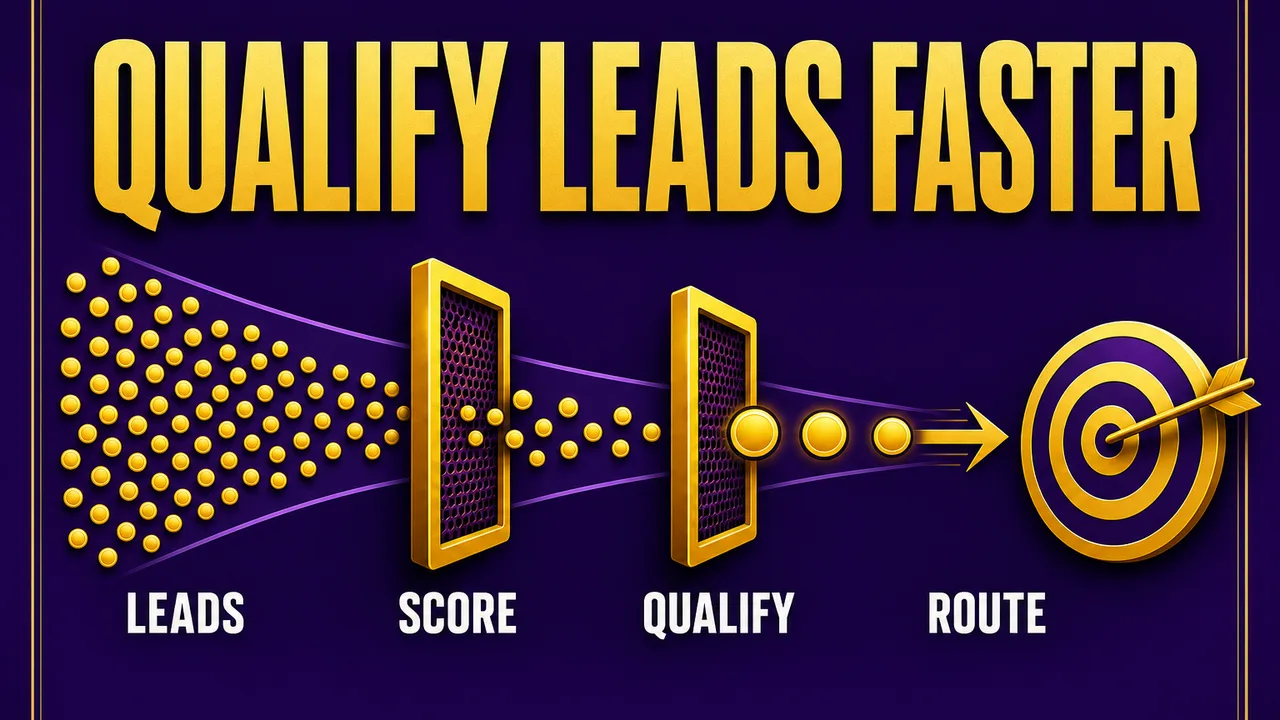
AI lead qualification turns raw form submissions into researched, scored and routed sales opportunities. The goal is not to let AI decide who deserves a salesperson. The goal is to remove the repetitive research and handoff work so sales sees the right context faster. For how reps use the same tooling day to day, see how sales teams use ChatGPT Work.
Definition: AI lead qualification is an automation workflow that enriches a lead, checks fit, scores intent, writes CRM context and routes the next sales action.
Example: An AI lead qualification workflow can read a demo request, inspect the company website, compare the lead with ICP criteria, write a CRM note and notify sales in Slack.
Key takeaway: Automate the research and scoring logic, but keep the qualification rubric explicit and auditable.
Business impact: AI lead qualification reduces manual research time and helps sales respond faster to leads that match the business.
What should AI lead qualification decide?
AI lead qualification should decide three separate things: fit, intent and next action. Fit asks whether the company matches the ideal customer profile. Intent asks whether the lead has a real problem, urgency or buying signal. Next action asks what sales should do now: respond immediately, nurture, request missing information, disqualify as spam or route to another team.
Keep those decisions separate because one score hides useful nuance. A lead can be high-fit but low-intent, low-fit but urgent, or unknown because key data is missing. A practical AI lead qualification workflow should show the reason for every score so sales can correct the rubric when the system is wrong.
The Yowox Lead Qualification Loop
The Yowox Lead Qualification Loop has six steps: capture, enrich, deduplicate, score, summarize and route. The loop is useful because it defines the entire workflow, not just the AI prompt. A lead that is scored but never written cleanly into the CRM is still manual work.
| Step | What the AI workflow does | Output |
|---|---|---|
| Capture | Reads form, chat or email submission | Raw lead record |
| Enrich | Checks website, company and role signals | Company context |
| Deduplicate | Looks for existing contacts/accounts | CRM match |
| Score | Applies fit and intent criteria | Qualified / review / not fit |
| Summarize | Writes the sales handoff | CRM note |
| Route | Assigns owner and sends alert | Next action |
Which data should the workflow collect?
AI lead qualification should collect only data that changes a sales decision. Useful fields include company name, website, role, industry, location, company size, source campaign, stated problem, urgency, budget signal, existing CRM history and whether the lead matches a target segment. Extra enrichment can look impressive, but unused fields add cost and noise.
The source of truth matters. CRM history should come from the CRM, not from a model's memory. Company facts should be checked against current web or enrichment data when available. The final handoff should include both the conclusion and the evidence, so a salesperson can quickly see why the AI workflow recommended that action.
How should lead scoring work?
Lead scoring should use a written rubric with weighted criteria, not a vague "good lead" prompt. A simple rubric can score ICP fit, role authority, operational pain, urgency, company size, geography, source quality and duplicate status. Each score should have a reason field, and the workflow should route low-confidence scores to review instead of pretending the answer is certain.
A lead-scoring rubric should also separate negative signals from missing data. Missing budget, for example, is not the same as no budget. Missing company size is not the same as poor fit. A conservative workflow marks the lead as "needs review" when key fields are absent; it does not quietly bury potentially valuable leads.
What should the CRM handoff include?
The CRM handoff should be short, structured and useful to a human. A good AI-generated handoff includes who the lead is, what the company appears to do, why the lead is qualified or not qualified, what evidence was checked, what is missing and the recommended next step. The original message should stay attached so sales can read the exact words if needed.
Use a stable output format: fit_score, intent_score, qualification_reason, missing_fields, recommended_action, owner, source_links and next_follow_up. Stable fields make AI lead qualification easier to evaluate because sales can compare the same output across many leads.
When should AI route leads automatically?
AI should route leads automatically only when the scoring rules are stable and the cost of a routing mistake is low. Obvious spam, obvious student/vendor outreach and obvious high-fit demo requests are good first automation candidates. Ambiguous strategic accounts should go to human review, even if the AI workflow can draft a recommendation.
This rollout matches the broader automation principle: start with narrow, reversible actions. For a ranking method across all possible workflows, see 7 Business Workflows You Should Automate First. For the production stack behind CRM writes and alerts, see The AI Automation Stack.
How do you measure AI lead qualification?
Measure AI lead qualification by response speed, manual research time saved, routing accuracy, sales acceptance rate, false rejection rate, meeting conversion rate and later revenue correlation. Early metrics should focus on workflow quality: did the AI workflow collect the right facts, score consistently and write a useful CRM note?
Review rejected and low-score leads regularly. If a "not fit" lead later becomes a customer, the rubric missed something. If sales ignores AI-qualified leads, the handoff is probably too noisy, too optimistic or not aligned with real sales priorities. Good lead qualification automation learns from sales corrections, not from generic internet examples.
What is a safe first project?
A safe first AI lead qualification project starts with one inbound source, one CRM, one written ICP and one sales-ready threshold. The first version can enrich the lead, draft a score, write a CRM note and notify sales for review. The second version can auto-route obvious cases after the sales team trusts the scoring reasons.
The best first result is a cleaner sales queue, not a complex scoring model. If sales can open the CRM and understand who the lead is, why the lead matters and what to do next, AI lead qualification is already saving time.
If your team still researches every inbound lead manually, this is a strong first automation candidate.
Frequently asked questions
What is AI lead qualification?
AI lead qualification is the use of an AI workflow or AI agent to enrich a lead, compare the lead against fit criteria, score buying intent, summarize the opportunity and route the next action to sales. AI lead qualification should not judge leads only by enthusiastic wording. A good workflow checks firmographic fit, stated problem, urgency, role, company size, location, source, duplicate records and whether the lead matches the company's ideal customer profile.
What data is needed to automate lead qualification?
Automated lead qualification needs the form submission, company website, role or title, industry, location, company size, source campaign, CRM history, existing account status and written qualification rules. The workflow should also know which fields are required before routing a lead to sales. If the CRM is messy or the ideal customer profile is vague, fix that first. AI can apply criteria quickly, but AI cannot invent a sales process the business has not defined.
Should AI assign lead scores automatically?
AI can assign lead scores automatically after the scoring rubric has been tested against real historical leads and reviewed by sales. Early versions should recommend a score and show the reasons. Sales can approve, correct or override the result. After enough examples, the system can auto-route obvious spam, obvious poor-fit leads and obvious high-fit leads while keeping ambiguous opportunities in a human review queue.
How do you prevent AI lead qualification from rejecting good leads?
Prevent false rejections by separating fit score, intent score and missing-data score. A quiet enterprise lead with a sparse form may be more valuable than a small lead with an excited message. Route unknowns to review instead of marking them unqualified. Keep a sample audit of rejected leads, compare scores against later revenue outcomes and update the rubric when sales sees a pattern the AI workflow missed.
Where should qualified leads go after AI scoring?
Qualified leads should go into the CRM with a clean summary, score, qualification reasons, source data, recommended next action and owner. The output should also notify the right channel, such as Slack or email, when a lead crosses the sales-ready threshold. The important point is that AI lead qualification must end in an operational action, not another dashboard someone has to check manually.
Alex
Founder & Lead AI Writer
Alex is the founder of Yowox and lead AI writer since 2024, breaking down complex information into clear, actionable insights for thousands of readers every day. Alex has built AI automation systems for businesses since 2024, focusing on AI agents, workflow automation, and business process optimization.
Save hours. Save thousands.
Practical guides, real workflows, and the latest AI and automation news that matters — straight to your inbox.